





If an airline damaged your luggage, document it before you do anything else. Photograph the bag where you are standing, keep the baggage tag and your itinerary, and report the damage to the carrier before leaving the airport if you can.
Then keep the bag. Do not repair, clean up or discard it while a claim is open.
One distinction decides where your claim goes. Damage that happened while the bag was in the airline's control is an airline claim. MVST's current warranty excludes airline transit damage and directs it to the carrier, which makes the two routes separate rather than alternatives.
Airline Damaged Your Luggage: What to Do First

- Photograph the whole bag and then close-ups of each damaged area, including the wheels, handle, lock, shell and any damaged contents.
- Keep the baggage tag, the baggage receipt, your itinerary or boarding pass, and any proof of the bag's purchase or value.
- Report the damage at the airport before you leave if at all possible, and ask for a written claim or file reference.
- Keep the damaged bag exactly as it is until the carrier tells you how to proceed.
- Submit the carrier's written claim by its deadline, which varies by airline and route.
Two cautions. Deadlines and submission methods differ between carriers, so one airline's rule does not transfer to another. And the DOT also advises against overpacking checked bags, because pressure on the latches makes them easier to spring open, which matters if a carrier raises improper packing.
If the damage creates a hazard, such as a sharp edge or a broken component, document it and ask the carrier how to handle the bag rather than altering the evidence yourself.
What Photos and Documents Should You Save?
- The full bag from several angles, plus a close-up of each damaged area.
- The wheels, handle, lock and shell specifically, so each one is clearly recorded.
- The baggage tag and baggage receipt, and your itinerary or boarding pass.
- The claim or file reference the carrier gives you.
- Proof of purchase or value for the bag, and receipts for damaged contents where you have them.
A missing receipt does not automatically end a claim. Carriers assess the evidence available, and requirements differ, so submit what you have rather than assuming the claim is lost.

Airline Claim vs MVST Warranty: Which Route Applies?
| Airline claim | MVST warranty | |
|---|---|---|
| When it applies | Damage that occurred while the checked bag was in the carrier's control | An eligible manufacturing defect under the current written terms |
| Typical trigger | The bag left you intact and came back damaged | A fault appearing during normal use, not tied to a transit event |
| What the policy says | MVST's warranty excludes airline transit damage and directs it to the carrier | Current listed defects include shell cracks or breaks, and wheels, handles or telescoping handles that break off and are no longer usable |
| Time pressure | High. Carrier deadlines can be short | Lower, but coverage still depends on the written terms |
| What to send | Photos, baggage tag, itinerary, claim reference | Order or proof of purchase, model and size, photos or video |
MVST's Limited Lifetime Warranty is the controlling document, and eligibility always depends on the facts and the written terms rather than on the symptom alone. If the cause is genuinely unclear, protect the time-sensitive airline route first, since that deadline will pass while a policy question is being answered.
Broken Wheel or Handle After a Flight
For wheels and handles, the passenger's position is stronger than many travellers think. The US Department of Transportation states that although airlines are not required to cover fair wear and tear, they cannot exclude liability for damage to wheels, handles, straps and other components of checked baggage.
That position has enforcement behind it. After inspections at 16 US airports found carriers routinely excluding exactly those parts, and in some cases discouraging or refusing damage reports, the Department issued a formal notice to carriers calling categorical exclusions arbitrary limitations of liability, and reminding airlines they must accept all reports of mishandled baggage even when an agent believes the airline is not liable.
So a blanket wear-and-tear refusal on a wheel that came off in transit is not the end of the conversation. What matters is timing and cause: a bag that was accepted intact and returned with a wheel missing is a transit event, while a handle that broke off during normal use, with no flight involved, is a different question and may be a warranty matter instead.

Will the Airline Pay for a Damaged Suitcase?
Often, subject to evidence and limits. The DOT states that airlines are responsible for repairing or reimbursing a passenger for damaged baggage when the damage occurs while the bag is under the airline's control, and that passengers should file a claim as soon as possible.
Three things narrow it. Airlines are not responsible for pre-existing damage or damage caused by improper packing. Where a bag cannot be repaired, the carrier negotiates compensation based on the value of the bag and its depreciation, so this is rarely a replacement cost. And fair wear and tear sits outside the obligation.
US Domestic vs International Liability Limits
For US domestic travel the figure is $4,700 per passenger, set under 14 CFR Part 254. It is worth being precise about what that number is: the Federal Register describes it as the minimum liability limit that carriers may set, raised from $3,800. In other words, an airline cannot limit its liability below that figure, and it may choose to pay more.
For most international travel the Montreal Convention applies, and the limit is 1,519 SDR per passenger for destroyed, lost, damaged or delayed baggage, in force since 28 December 2024. SDR is a unit of account used by the IMF, so the dollar value moves with exchange rates rather than being fixed.
Neither figure is what you should expect to receive. The domestic figure is the lowest limit a carrier may set, the Montreal figure is the standard limit unless you made a special declaration of value at check-in, and in both cases the actual amount depends on proven loss, depreciation, the contract of carriage and the applicable law. One trap on connecting trips: an itinerary sold as a single international contract is generally treated as international throughout, including the domestic-looking leg.
Claim Deadline vs Claim Processing Time

These get conflated constantly and they are not the same thing.
The deadline is short. For damaged checked baggage under the Montreal Convention, a written complaint is generally due within seven days of receiving the bag, and individual carriers may set their own shorter windows for reporting. Verify your carrier's current rule, because missing the deadline is the one failure that cannot be argued around afterwards.
The processing time is open-ended. There is no fixed period in which a carrier must decide, and it varies by airline, route and how complete your evidence is. Filing promptly with a full evidence packet is the only part of that you control.
Airline Claim vs Travel Insurance
| Airline claim | Travel insurance or card benefit | |
|---|---|---|
| Role | The primary route for damage the carrier caused | Separate cover that may apply in addition or instead |
| What governs it | DOT rules, the Montreal Convention and the contract of carriage | The wording of your specific policy or card benefit |
| Common conditions | Prompt reporting, evidence, liability limits, depreciation | Excess or deductible, exclusions, claim windows, coordination rules |
| Typical requirement | Baggage tag, claim reference, photos | Often the airline's claim outcome or refusal first |
Many policies expect you to claim from the carrier first and will ask for that outcome. Read the actual policy wording rather than a summary, and nothing here says any particular insurer will pay.
MVST Support After Airline Damage
If the damage happened in airline transit, the claim belongs with the carrier under MVST's current policy. MVST Support can still help with two things: product and model questions that support your claim, such as confirming specifications, and a separate suspected manufacturing defect that is not connected to the transit event. If the damage is to the lock, TSA locks explained covers how the lock works and when to contact Support.
If you contact Support, send the order or proof of purchase, the model and size, and photos or video. Nothing in this article promises warranty approval, and a transit claim and a warranty claim should not be pursued as two routes to the same recovery.
Product and Warranty Context
| Product | Hardware | Warranty context | Airline damage |
|---|---|---|---|
| MVST TREVA | RIVA tri-bearing wheels; multi-stage aluminum telescoping handle | Limited Lifetime Warranty covering listed manufacturing defects under its terms | Transit damage excluded; claim with the carrier |

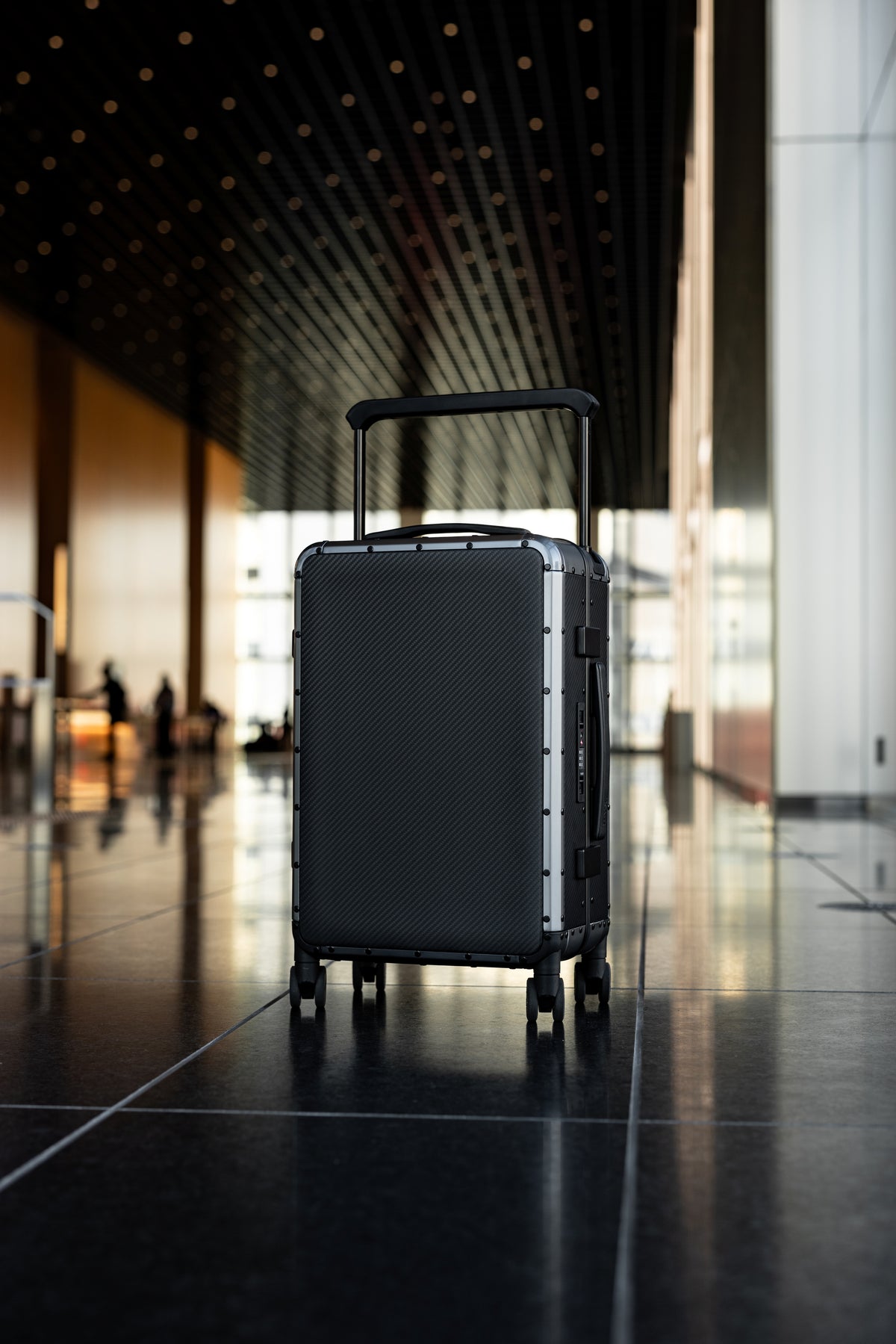
A durable case is not an airline-damage-proof case, and the TREVA aluminum suitcase page carries the current hardware details rather than any claim about transit outcomes. Scratches and small dents from normal use are covered in how to care for an aluminum suitcase.
Conclusion
Document the damage before you move the bag, report it to the carrier promptly, keep the tag and the claim reference, and preserve the suitcase while the claim is open. Transit damage goes to the airline under MVST's current policy. Contact MVST Support for policy and product questions, or for a separate suspected manufacturing defect.
FAQs
Will airlines pay for damaged luggage?
Often, when the damage occurred while the bag was in the carrier's control. The DOT states airlines are responsible for repairing or reimbursing damaged baggage in that situation, subject to liability limits. Pre-existing damage, improper packing and fair wear and tear sit outside that. Payment depends on your evidence and the carrier's assessment rather than being automatic.
What should I do if my airline damages my luggage?
Five things, in this order.
- Photograph the whole bag and each damaged area before moving it
- Keep the baggage tag, receipt and itinerary
- Report it at the airport if you can, and get a claim reference
- Keep the bag as it is. Do not repair or discard it
- File the written claim by the carrier's deadline
How much can I claim for damaged luggage?
On US domestic travel, airlines may not limit their liability below $4,700 per passenger under 14 CFR Part 254, and they may pay more. On most international travel, the Montreal Convention limit is 1,519 SDR per passenger unless you made a special declaration of value. Neither figure is an expected payout. The actual amount reflects proven loss and depreciation, so a three-year-old suitcase will not be valued at its purchase price. Both figures are revised periodically.
Is it worth claiming for a damaged suitcase?
Weigh four things rather than following a rule: whether the damage is functional or cosmetic, what the bag is worth now, how strong your evidence is, and whether you are still inside the deadline. A broken wheel or handle on a recent case is usually worth claiming. A scuff on an old one may not be worth the effort, and that is your call.
How do I claim for damaged luggage?
Report the damage to the airline as soon as possible, ideally before leaving the airport, and get a written claim or file reference. Then submit the carrier's claim form with your photos, baggage tag, itinerary and any proof of value, before its deadline. Forms, channels and deadlines vary by carrier, so use your airline's own current process.
What should I do if the airline broke my luggage wheel?
Photograph it, report it before leaving the airport if possible, and keep the bag. This is worth pressing: the DOT says carriers cannot exclude liability for damage to wheels, handles and straps, and must accept all damage reports even when an agent believes the airline is not liable. Fair wear and tear is treated differently, so a wheel that came off in transit is a stronger case than one that loosened over years.
How long does a damaged baggage claim take?
There is no fixed period, and it varies by carrier, route and how complete your evidence is. Do not confuse this with the filing deadline, which is short and firm: a written complaint for damaged checked baggage is generally due within seven days under the Montreal Convention, and individual carriers may require faster reporting. File promptly; expect the decision to take longer.
Does travel insurance cover damaged luggage?
It may, depending entirely on your policy. Cover, exclusions, excess or deductible and claim windows all vary, and many policies expect you to claim from the airline first and will ask for that outcome. Read the actual policy wording rather than a summary. Nothing here says a particular insurer will pay a particular claim.
What is the difference between airline damage and an MVST warranty claim?
The route depends on when and where the damage happened. Damage while the bag was in the carrier's control is an airline claim, and MVST's current warranty excludes airline transit damage and directs it to the carrier. An eligible manufacturing defect appearing during normal use is assessed separately under the warranty terms. If the cause is unclear, protect the airline deadline first, because it will pass while a policy question is being answered.
Sources
Sources and references
- [1]US Department of Transportation, Lost, Delayed, or Damaged Baggage, Office of Aviation Consumer Protection, US Department of Transportation. Airlines are responsible for repairing or reimbursing damaged baggage when damage occurs under their control, subject to liability limits; claims should be filed as soon as possible; pre-existing damage and improper packing are excluded; unrepairable bags are compensated on value and depreciation; carriers cannot exclude liability for wheels, handles and straps. Accessed 19 September 2026.
- [2]US Department of Transportation, Notice regarding damage to wheels, handles, and other components of checked baggage, Office of the Secretary of Transportation. Following inspections at 16 US airports, categorical exclusions for damage to specific baggage components are considered arbitrary limitations of liability, and carriers must accept all reports of mishandled baggage. Accessed 19 September 2026.
- [3]Office of the Secretary of Transportation, Periodic Revisions to Denied Boarding Compensation and Domestic Baggage Liability Limits, Federal Register. Raises the domestic baggage liability limit under 14 CFR Part 254 from $3,800 to $4,700 per passenger, and describes it as a regulatory minimum liability limit that carriers may set rather than a cap on what a carrier may pay. Accessed 19 September 2026; revised periodically.
- [4]Canadian Transportation Agency, Limits of liability for passengers and goods, Montreal Convention, Canadian Transportation Agency. Montreal Convention Article 22(2) limit of 1,519 SDR per passenger for destruction, loss, damage or delay of baggage. Cited as an official government statement of the treaty limit. Accessed 19 September 2026; revised periodically.
- [5]US Department of Transportation, Plane Talk, Tips on Avoiding Baggage Problems, Office of Aviation Consumer Protection, US Department of Transportation. Advises against overpacking checked bags because it puts pressure on the latches, and covers general baggage-claim practice. Accessed 19 September 2026.
Stay in the know
Sizing updates, packing systems, and the deals we think are worth it. No more than twice a month.
By clicking submit, you agree to our Privacy Policy.