


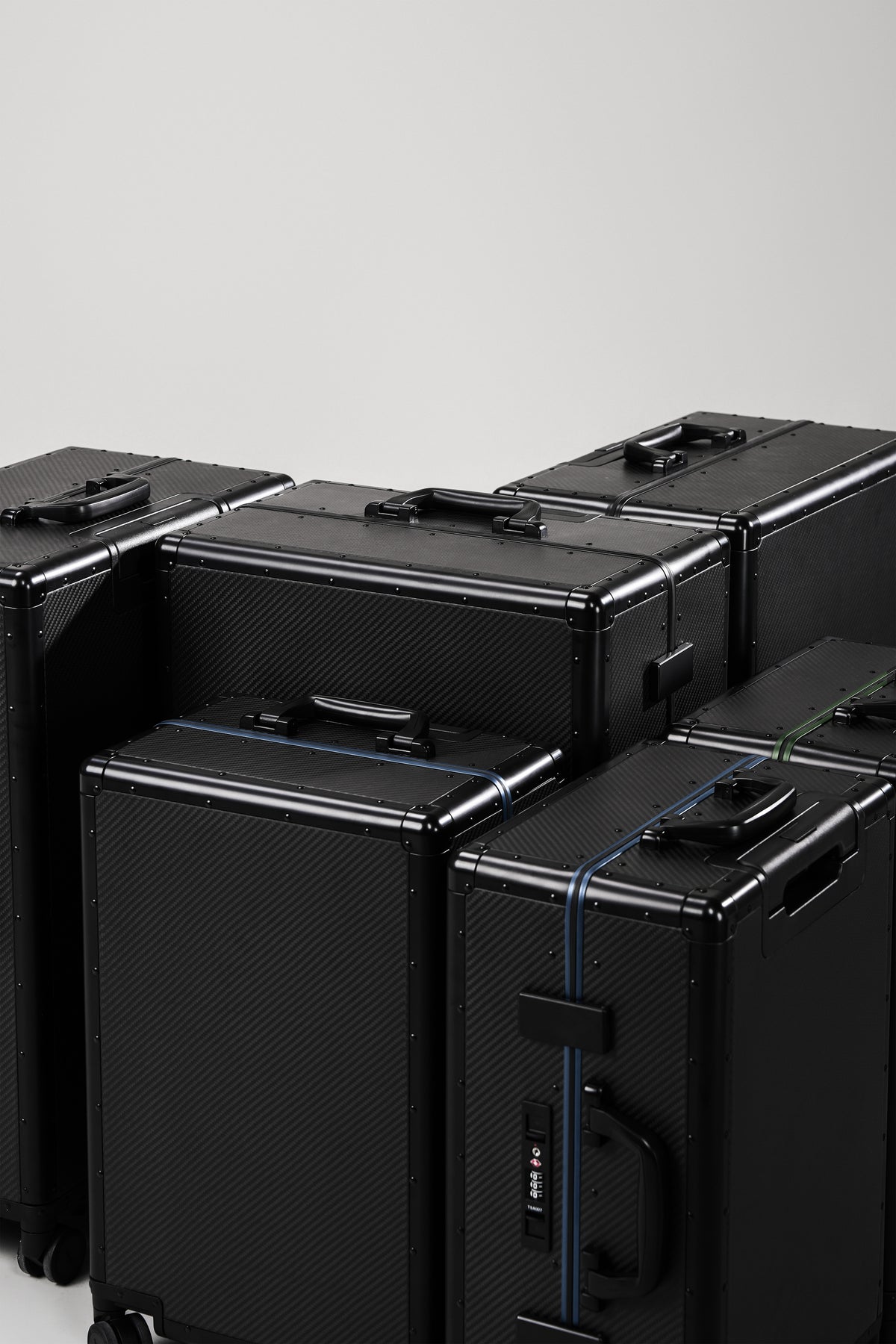
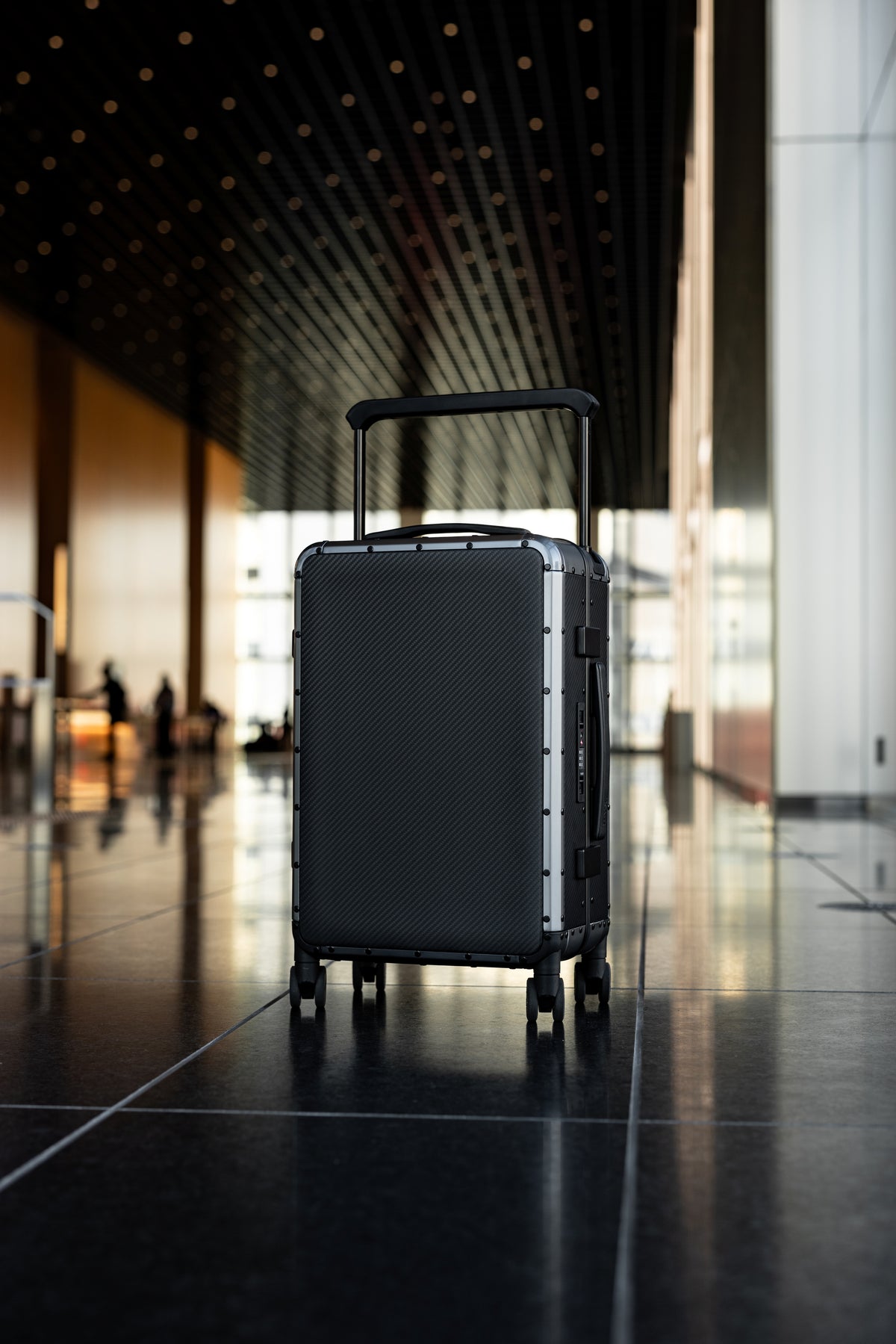


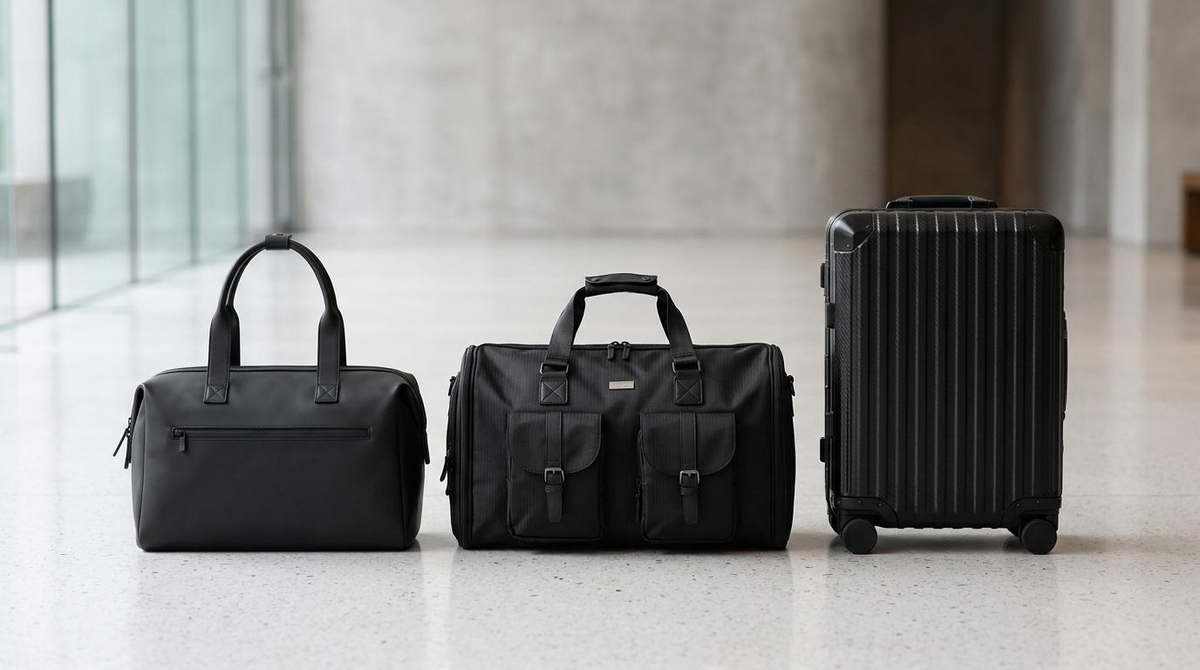

A wheeled carry-on is the most versatile business trip luggage for one to three nights, because it handles a mixed wardrobe, a laptop and a second pair of shoes without making you carry the weight. Two things change that answer. Pick a duffel when you are packing light and want speed and soft-sided flexibility more than wheels. Pick a garment bag or garment-duffel when a suit or structured jacket is the most important item you are bringing. Trip length matters less than your wardrobe and your route through the airport.
Carry-On vs Duffel vs Garment Bag at a Glance
Three formats, compared on the same eight criteria. No scores and no winner, because each one is answering a different brief.
| Decision factor | Carry-on suitcase | Duffel | Garment bag or garment-duffel |
|---|---|---|---|
| Best default use | Most versatile for two to three nights and heavier business kits | Minimalist one to two nights, light shoulder carry | Appearance-critical trips with structured clothing |
| Mobility | Wheels and a telescoping handle | Hand or shoulder carry; some have a trolley sleeve | Usually hand or shoulder carry; hybrids may add a trolley sleeve |
| Packing shape | Structured clamshell | One flexible cavity | Garment-first fold path or a dedicated garment panel |
| Formalwear | Depends on the fold and any garment panel. Protects from outside compression | Weak unless you isolate the clothing deliberately | Best dedicated structure, though it can still crease |
| Tech access | Varies. Often inside unless the case is business-focused | Fast if there is a padded laptop pocket | Often limited in traditional bags; hybrids vary |
| Shoes | Usually easy to separate | Can eat the central volume | A dedicated shoe pocket helps; traditional bags may need a second bag |
| Airline fit | Measured on full exterior dimensions | Measured the same way. Soft does not mean exempt | American publishes a separate garment-bag allowance |
| Main trade-off | Higher empty weight and more bulk | Packed weight is carried on your body | Less general capacity, and extra folds in hybrids |
What Makes Business Trip Luggage Different
Workwear
Structured jackets, dress shirts, trousers and dresses react badly to compression in a way casual clothing does not. A crushed t-shirt is fine. A crushed lapel is not.
Tech
A laptop, charger, power bank and documents need predictable access and protection. If you have to unpack the bag to reach the laptop at security, the bag is working against you.
Mobility
Wheels take the load off you. A shoulder bag removes the rolling bulk and transfers that weight onto your body instead. Neither is free.
Shoes
A second pair of shoes changes the requirement more than an extra night does. Shoes are bulky, awkwardly shaped and need to stay away from your clothes.
Best Bag for a 1-Night Business Trip
One night usually favors a duffel or a compact carry-on, unless formal clothing drives the decision.
- Duffel: low empty weight and one large opening. The MVST Duffle Bag is 2.58 lb at 22.7 L with a padded 15-inch laptop slot, which suits a casual or lightly structured wardrobe.
- Carry-on: wheels and rigid organization, worth it once the laptop, samples or a second pair of shoes add weight you would rather not carry.
- Garment format: the right call when the single business outfit is the most important thing you are bringing.
Best Bag for a 2-Night Business Trip
Two nights is where the crossover happens for most travelers. You are now packing two work outfits, a blazer or suit, shoes and a laptop kit, and those need separate zones rather than one cavity.
- A carry-on becomes the strongest general-purpose option once shoes, tech and spare clothing all need somewhere distinct to live.
- A garment-duffel is efficient if you need one suit or blazer and still want a shoulder-carried weekend format.
- A plain duffel stays viable for light packers who do not need formal-garment structure.
Best Bag for a 3-Night Business Trip
Three nights is a capacity and structure test, not an automatic move to checked luggage. Most travelers can still do it in a carry-on.
- Carry-on: the default, provided the full packing list fits without forcing compression onto structured garments.
- Garment bag plus a personal item: workable for appearance-critical trips, as long as you have answered where the shoes, laptop and toiletries go.
- Shoulder duffel: less attractive as the packed weight climbs, unless you specifically prefer soft-sided carry.

Carry-On vs Duffel for Business Travel
The carry-on wins when wheels, structured organization and heavier tech or shoes matter. The duffel wins when the pack is light, you want one large opening, or the bag has to move easily between a car, a train and a hotel.
Empty weight reflects different product roles. The MVST duffel prioritizes a light, flexible carry, while the TREVA carry-on adds an aluminum shell, frame, wheels and a telescoping handle. That extra structure trades lower empty weight for rolling mobility, security and protection from outside compression. Compare what you will carry and how far you will move it, not weight alone.
Airline acceptance comes from the fully packed exterior dimensions either way. A bag marketed as a weekender has no special status.
Carry-On vs Garment Bag for Business Travel
This is general-purpose packing against garment-first organization.
A carry-on is more versatile across mixed clothing, shoes, toiletries and tech. A garment bag is more specialized: it gives the structured garment a dedicated path and restraint system, and it assumes you will keep accessories somewhere else.
That assumption is the catch. A traditional garment bag may not work as your only bag if it has no dedicated shoe or laptop capacity, and on a short business trip you still have to put those somewhere. Neither format eliminates wrinkles. A garment-specific design can reduce shifting and sharp folds when you use it correctly, which is a different claim.
Duffel or Garment Bag, Which Handles Business Clothes Better
- Plain duffel: flexible general storage, but clothing slumps and compresses when heavy items settle on top of structured pieces.
- Garment bag: a dedicated garment path and straps reduce shifting and sharp folds, at the cost of general cargo flexibility.
- Garment-duffel hybrid: tries to do both. The wraparound transformation still creates folds, and it can put pressure on tailored clothing if you overpack it. The MVST garment weekender is 4 lb, converts between a 22 x 13 x 11 in duffel and a 20 x 40 in garment mode, and has a dedicated shoe compartment. MVST states it has room for two suits.
How to Pack Suits, Shirts and Shoes for a Short Business Trip

The mechanism behind good garment packing is pressure and fold geometry. Smithsonian Institution guidance on storing textiles advises keeping fabric flat with minimum folding and pressure, padding any fold that cannot be avoided, and never storing items under heavy objects because that creates sharp folds which are difficult to remove. That is preservation guidance rather than luggage testing, but the physics carries over to a packed bag.
- Keep structured garments away from shoes, chargers and anything else rigid enough to become a pressure point.
- Avoid unnecessary sharp folds. Where you must fold, follow the natural body and seam lines and keep pressure off the shoulders and lapels.
- Pad the fold if you can. Rolling a soft layer inside the fold spreads the crease instead of concentrating it.
- Use garment straps or panels to stop clothing shifting, rather than to compress it flat.
- Put shoes in a dedicated compartment or a shoe bag, with the soles facing away from the jacket chest and collar.
- Keep liquids accessible. The TSA 3-1-1 liquids rule means your toiletries come out at security, and digging for them is how a neatly packed jacket gets disturbed.
1, 2 and 3-Night Packing Examples
Three reproducible lists. Treat these as planning examples rather than verified capacity claims, because MVST has not yet published packing tests for these bags.
Test A, one night:
- Laptop and charger
- Toiletry kit
- Two shirts or tops
- One pair of trousers or a skirt
- Underwear and socks
- Sleepwear
- One blazer or light layer
- Primary shoes, worn
Test B, two nights:
- Laptop kit
- Three tops
- Two bottoms
- Blazer or suit
- Underwear and socks
- Sleepwear
- Toiletries
- One or two pairs of shoes
Test C, three nights:
- Laptop kit
- Two bottoms
- Blazer or suit
- Gym or casual layer
- Underwear and socks
- Sleepwear
- Toiletries
- Optional second shoes
Real-World Business Travel Bag Examples

Seven bags across the three formats, from MVST and four other brands. This is a specification reference, not a ranking. Trip ranges and garment claims in the last column are each manufacturer's own wording for its own product. Specifications verified 7 September 2026; recheck before publication. You can also browse MVST bags directly.
| Product | Type | Exterior dimensions | Capacity | Empty weight | Garment handling | Role here |
|---|---|---|---|---|---|---|
| MVST TREVA Carry-On | Carry-on | 21.7 × 14.8 × 8.7 in | 34 L | 9.37 lb | No dedicated garment panel stated; structured case | MVST rolling example |
| MVST Duffle Bag | Duffel | 17.3 × 9.4 × 8.4 in | 22.7 L | 2.58 lb | No garment system stated; padded 15-inch laptop slot | MVST light-duffel example |
| MVST Garment Weekender | Garment-duffel | Duffel 22 × 13 × 11 in; garment 20 × 40 in | Not published | 4 lb | Converts to garment bag; dedicated shoe compartment; MVST states room for two suits | MVST garment example |
| Away The Carry-On | Carry-on | 21.7 × 14.4 × 9 in | 41 L | 7.5 lb | Compression system; brand advises folding structured garments rather than rolling | Rolling reference |
| Patagonia Black Hole 40L | Duffel | 19.7 × 12.5 × 8.5 in | 40 L | 2 lb 4.9 oz | No dedicated garment system | General-duffel reference |
| Halfday Garment Duffel 40L | Garment-duffel | 20.5 × 11 × 12 in | 40 L | 1.8 lb | Hanging compartment and reinforced hanger loops, up to 40R; brand claims two to three days | Hybrid reference |
| Briggs & Riley Classic Garment Bag | Garment bag | 22.5 × 24.5 × 2 in | 35.5 L | 3.2 lb | Garment straps and hanging hook; garment-first design | Traditional garment reference |

Airline Fit for Carry-On, Duffel and Garment Bag
- The FAA advises checking the airline actually operating your flight, because carry-on rules can be stricter than any general guidance and limited bin space can still force a gate check.
- Southwest Airlines publishes a carry-on limit of 24 × 16 × 10 in including handles and wheels, verified 7 September 2026. The TREVA Carry-On's published 21.7 × 14.8 × 8.7 in measurements fall within that limit.
- Delta publishes a 22 × 14 × 9 in limit plus a 45 linear inch cap, also including handles and wheels.
- American Airlines separately allows a soft-sided garment bag up to 51 linear inches. That is an American Airlines rule and not an industry standard, so do not assume it elsewhere.
- A duffel is measured like any other bag. Soft-sided construction does not exempt it from the carrier's dimensions, and a bag sold as a weekender can still be too large.
Which Business Trip Bag Should You Choose

- Carry-on: a mixed wardrobe, a laptop, shoes, and you want wheels.
- Duffel: a light one or two night pack, flexible access and a comfortable shoulder carry.
- Garment bag or garment-duffel: structured clothing is the top priority and appearance matters more than general capacity.
Choose Your 1-3 Night Business Travel Setup
- Rolling the mixed kit: TREVA Aluminum Suitcase, carry-on size. Structured packing, wheels, 34 L.
- Travelling light: MVST Duffle Bag. 2.58 lb, 22.7 L, padded laptop slot.
- Protecting the suit: MVST Duffle Bag Garment Bag 2 in 1. Converts between duffel and garment modes, with a dedicated shoe compartment.
Conclusion
Take the wheeled carry-on for the most versatile mixed business kit. Take the duffel for light, fast trips where you do not mind carrying the weight. Take the garment bag or garment-duffel when structured clothing is the real constraint and you have somewhere else to put the shoes and the laptop. Check the packed dimensions against your airline before you travel, whichever you choose.
FAQs
What is the best luggage for business travel?
It depends on the trip pattern rather than the brand. A wheeled carry-on covers the broadest range of one to three night trips, because it handles a mixed wardrobe, a laptop and shoes without you carrying the load. A duffel suits lighter, more minimalist trips where speed and a single large opening matter more than wheels. A garment bag or garment-duffel makes sense when a suit or structured jacket is the most important item you are bringing. Start from what you need to pack, then choose the format.
What is the best business cabin luggage for a short trip?
Start with the operating airline's current size rules. The TREVA Carry-On falls within Southwest's published 24 × 16 × 10 in limit; some carriers publish smaller limits, so it should not be presented as universally compatible. Once a bag clears the rules for your route, compare whether it has wheels, what it weighs empty, how quickly you can reach the laptop at security, and whether structured clothing has somewhere sensible to go. A bag that fits the sizer but forces you to unpack it at the checkpoint is not the better cabin bag.
What is the best bag for a 1-night business trip?
A small duffel or a compact carry-on usually covers it. One night typically means one meeting outfit, one travel outfit, a laptop kit and a toiletry bag, which fits a duffel comfortably and leaves you carrying very little. Choose a garment format instead when the single business outfit has to arrive without hard folds or pressure, for example a suit for a presentation. If you are adding a second pair of shoes or carrying samples, the wheels on a carry-on start earning their place.
What is the best bag for a 3-night business trip?
A carry-on is usually the strongest option, and three nights does not automatically mean checked luggage. The test is whether four tops, two bottoms, a blazer or suit, sleepwear, toiletries, a laptop kit and possibly a second pair of shoes all fit without crushing the structured garments. If they do, the carry-on gives you the most flexibility. Garment-focused travelers may prefer a hybrid, but they still need a plan for shoes, tech and toiletries, which a traditional garment bag rarely accommodates.
Is it better to fly with hard or soft luggage for business travel?
Neither is universally better, and the specific product matters more than the category. Hard-sided rolling luggage gives you structure, wheels and protection from outside compression, at the cost of empty weight and rigid volume you cannot squeeze. Soft duffels give you flexible packing and a much lower empty weight, but the packed weight ends up on your shoulder and structured clothing has less protection. Compare the two bags you are actually choosing between on empty weight, capacity, access and how each one moves through an airport.
Can you bring a carry-on and a garment bag on the same flight?
Usually not as two separate items. American Airlines lists a soft-sided garment bag inside its carry-on allowance, with its own limit of 51 linear inches, which means the garment bag takes your carry-on slot rather than adding to it. You would still get one personal item under the seat. This is an American rule and not an industry standard, so check your own carrier before you plan around it. It matters because a garment-first setup only works if your shoes, laptop and toiletries fit in the garment bag or your personal item.
What bags do professionals use?
There is no single professional bag, and prestige framing is not useful here. Working travelers use carry-ons, briefcases, duffels and garment bags depending on how long the trip is, what they need to wear, how much tech they carry and how far they walk through airports. Someone flying weekly with a laptop and one blazer makes a different choice from someone attending a three-day conference with two suits. Pick the format by the task rather than by what looks senior.
Is a duffel bag considered a carry-on?
It can be, if the fully packed exterior dimensions meet your airline's carry-on rules. Soft-sided construction does not exempt a bag from size limits, and a duffel that measures fine when empty can bulge past the limit once it is full. Note also that a duffel may be small enough to count as a carry-on but too large to count as a personal item, which is a different and stricter allowance. Measure the packed bag and check the carrier's current published dimensions before you fly.
Is a garment bag better than a carry-on for a suit?
For the suit specifically, usually yes. A garment bag gives the jacket a dedicated fold path and a restraint system that stops it shifting, which is exactly what causes creasing in a general-purpose bag. For the trip as a whole, a well-packed carry-on is often more useful, because it also holds shoes, toiletries and tech. Neither format guarantees zero wrinkles. Fabric, garment construction, the fold path, pressure and handling all affect how a suit arrives.
What should you avoid when buying business trip luggage?
Avoid vague claims like professional or indestructible that have no measurement behind them. Avoid assuming a bag is airline-compatible because it is sold as cabin luggage; check the packed dimensions against your carrier. Look closely at handles and wheels, since those fail long before a shell does. Make sure you have a plan for reaching the laptop at security without unpacking. And avoid any bag whose size forces structured clothing under heavy compression, because that is where a blazer gets ruined.
Sources
Sources and references
- [1]Federal Aviation Administration, Carry-On Baggage Tips, Office of Aviation Safety, US Department of Transportation. Instruction to check the operating airline's rules, limited overhead bin space and the possibility of gate checking. Accessed 7 September 2026.
- [2]Southwest Airlines, Carry-on bags and size limits, Southwest Airlines. Carry-on total size including handles and wheels cannot exceed 24 × 16 × 10 in; American Airlines separately states that a soft-sided garment bag cannot exceed 51 linear inches; that allowance is not an industry standard. Verified 7 September 2026.
- [3]Delta Air Lines, Carry-On Baggage, Delta Air Lines. Combined dimensions must not exceed 45 linear inches and individual measurements may not exceed 22, 14 and 9 in, including handles and wheels. Verified 7 September 2026.
- [4]Transportation Security Administration, Travel Tips, including the 3-1-1 liquids rule, US Department of Homeland Security. Security screening and liquids packing context. Accessed 7 September 2026.
- [5]Smithsonian Institution, How do I store antique textiles at home?, Smithsonian Institution. Minimise folding and pressure, pad unavoidable folds, and avoid storing fabric under heavy items because that creates sharp folds which are difficult to remove. Preservation guidance, not luggage testing. Accessed 7 September 2026.
Stay in the know
Sizing updates, packing systems, and the deals we think are worth it. No more than twice a month.
By clicking submit, you agree to our Privacy Policy.