


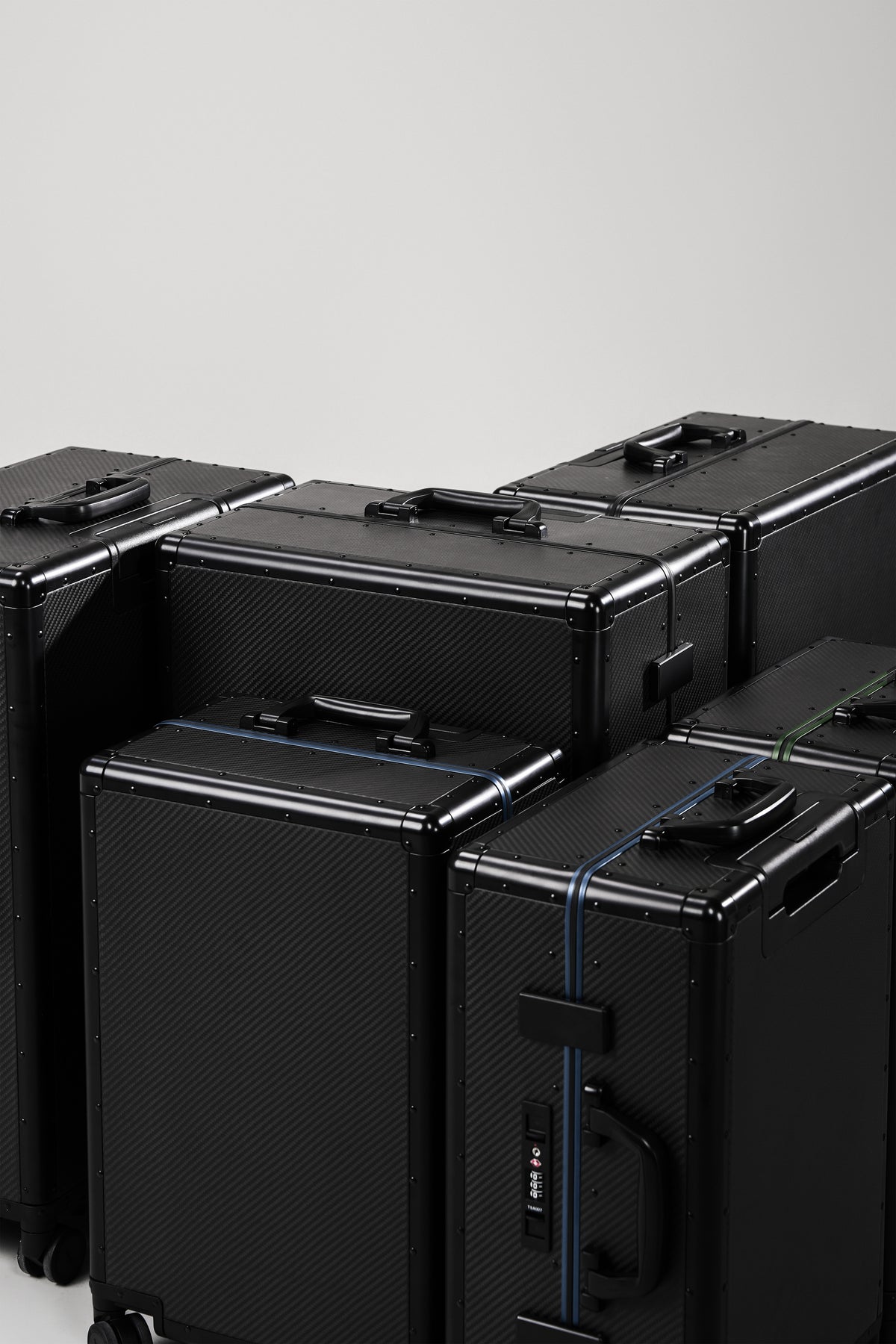
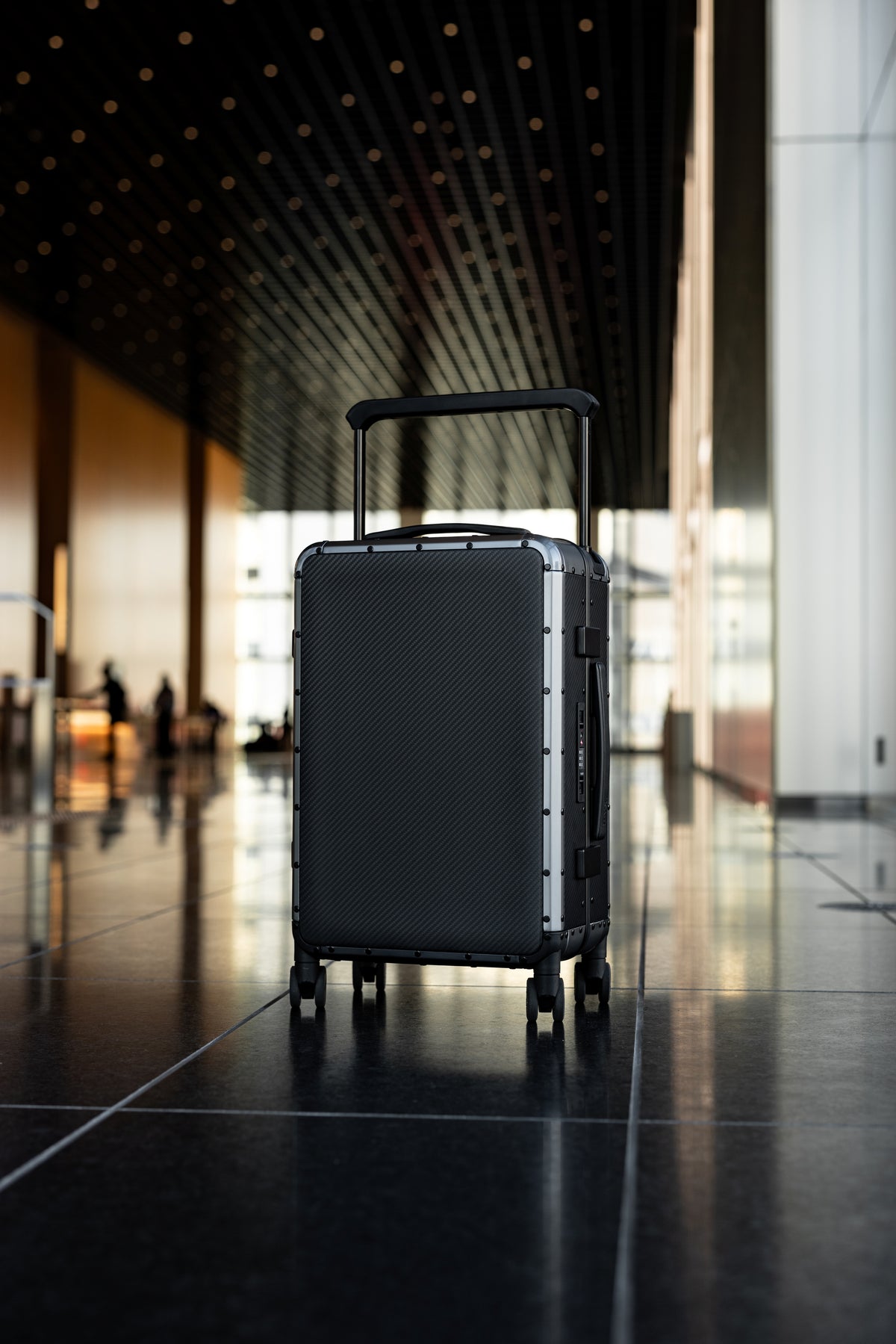


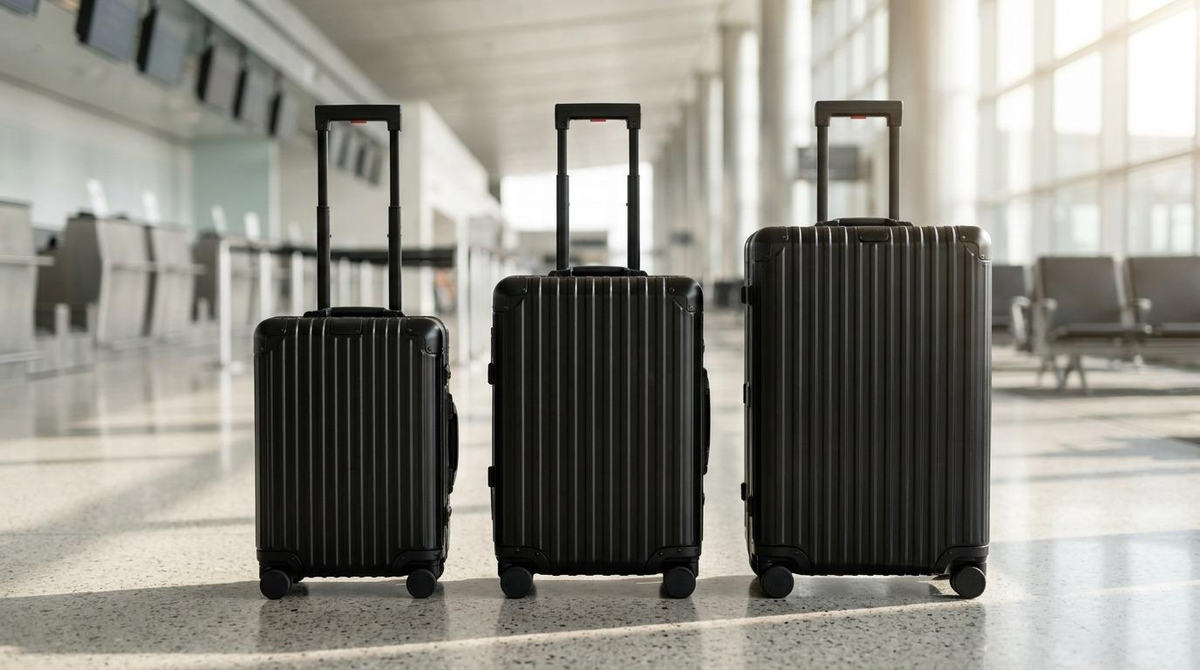

Start with a carry-on for short trips and whenever you want the bag with you in the cabin, provided its full exterior dimensions meet your airline's rules. Move to a medium checked case when carry-on capacity runs out but a very large case would add bulk you do not need. Choose a large checked case for longer stays, bulky clothing, shared packing or extra equipment, and accept that it is the easiest size to overpack past a weight or size allowance. Trip length alone will not decide it. Clothing bulk, laundry access, airline rules and the empty weight of the case all move the answer.
Carry-On, Medium and Large Compared at a Glance
The table applies the same fields to all three sizes, using current TREVA measurements. One thing to hold on to before you read it: carry-on, medium and large are retail categories, not regulated sizes. Airlines set the acceptance rules, and those rules are carrier-specific and route-specific. A brand's size label can be looser than the limit you actually face at the gate.
| Size | TREVA exterior (incl. wheels) | Capacity | Empty weight | Travel mode | Main trade-off |
|---|---|---|---|---|---|
| Carry-On | 21.7 × 14.8 × 8.7 in (55 × 37.5 × 22 cm) | 34 L | 9.37 lb / 4.25 kg | Cabin only if your airline permits it | Most mobile, least capacity |
| Medium Checked | 25.8 × 16.6 × 9.5 in (65.5 × 42 × 24 cm) | 62 L | 11 lb / 5 kg | Checked | Middle ground on capacity and handling |
| Large Checked | 29.9 × 20.5 × 11.4 in (76 × 52 × 29 cm) | 97 L | 13.78 lb / 6.25 kg | Checked | More capacity, easiest to overpack |
What Carry-On, Medium and Large Actually Mean
-
Carry-On
Cabin acceptance comes from the full exterior dimensions and the airline, not from a product name like 20-inch or 22-inch. Southwest Airlines states that the total size of your carry-on, including the handles and wheels, cannot exceed 24 × 16 × 10 in and must fit the sizer at the airport. The FAA points out that carriers set their own carry-on rules and can be stricter, so confirm with the airline you are flying.
-
Medium Checked
The 24 to 26 inch range is a retail convention rather than a regulatory category. No airline publishes a medium size. What they publish is a total dimension limit and a weight limit, and a medium case has to clear both.
-
Large Checked
At 28 to 30 inches, the full dimensions start to matter a great deal, because the width and depth grow along with the height. This is the size where a case can sit comfortably inside a brand's own category and still land close to an airline's total-dimension limit once it is packed.
Exact TREVA Dimensions, Capacity and Weight
All TREVA colors share the same published size specifications, so one product page covers the range. The TREVA carry-on, medium and large specifications state that exterior measurements include the wheels, which is the same basis airlines use.
Adding the three exterior measurements gives you the linear total, the number many carriers use for checked bags. The arithmetic below is an editorial calculation from the current published dimensions. It is not an airline approval, and a packed bag can measure more than an empty one.
| TREVA size | Height + width + depth | Linear total | How to read it |
|---|---|---|---|
| Carry-On | 21.7 + 14.8 + 8.7 in | 45.2 in | Compare each measurement against your carrier's published limit. TREVA fits Southwest's 24 × 16 × 10 in allowance. Airlines using 22 × 14 × 9 in measure width at 14 in, so check before flying |
| Medium Checked | 25.8 + 16.6 + 9.5 in | 51.9 in | Comfortably inside a 62-inch example before packing, expansion or protrusions are counted |
| Large Checked | 29.9 + 20.5 + 11.4 in | 61.8 in | Only 0.2 in under a 62-inch example. Remeasure the packed bag and check your carrier before you travel |
The large case is the one to watch. It sits inside a 62-inch standard by a fifth of an inch when empty, and a full bag with a bulging lid can measure more than an empty one.


Carry-On or Medium, Which Fits Your Trip
- Pick the carry-on when staying out of baggage claim matters, when you want your essentials with you, and when you are willing to pack to a smaller volume. That only works if your airline accepts the bag, so check each dimension rather than assuming.
- Pick the medium when the itinerary, the clothing volume or your equipment genuinely exceeds what a carry-on holds, but a large case would add handling and weight risk you do not need. In the TREVA line that is 34 L against 62 L, so the medium holds nearly double.
- The 24 inch versus 26 inch question is really a capacity and full-dimension question. Two inches of extra height comes with extra width and depth, and it changes what the packed bag weighs. Height on its own tells you very little, and no suitcase height converts into a number of days.
Medium or Large, When Does More Space Become Too Much

Extra volume fills faster than an airline's weight allowance grows. That is the whole problem with large cases. The allowance does not increase because your bag got bigger.
The TREVA line shows the jump clearly. Medium is 62 L, large is 97 L, which is 56 percent more volume. The large also starts 2.78 lb heavier when empty, so you begin with less of your weight allowance available and more room to fill.
Choose large when bulky clothing, family or shared packing, or a long stay genuinely needs the volume. Choose medium when easier lifting and keeping the packed weight under control matters more to you.
What Size Suitcase Suits a 23 kg Limit?
No single suitcase size corresponds to 23 kg. It is a weight allowance, not a dimension. Delta's checked baggage policy states that a standard checked bag must stay under 50 lb, roughly 23 kg, with total dimensions not exceeding 62 in, verified 4 September 2026. Your own fare, route, cabin and carrier can differ.
The empty case comes out of that allowance first. A TREVA medium at 5 kg leaves 18 kg for your belongings. The large at 6.25 kg leaves 16.75 kg. Same allowance, 1.25 kg less to pack.
Which means size and weight can move in opposite directions. A densely packed medium can exceed 23 kg. A lightly packed large can stay well under it. Weigh the packed bag at home rather than reasoning from its dimensions.
Can You Check a 28, 30 or 32 Inch Suitcase?
The answer is conditional every time, and height alone cannot settle it. Where a carrier uses a total-dimension limit, add the packed bag's full outside height, width and depth, then compare that sum with the published figure.
Using the Delta example above, a standard checked bag stays under 62 in total and 50 lb. A 28 inch case is routinely within that. A 30 inch case may or may not be, depending entirely on its width and depth. A 32 inch case is not automatically refused, but it is far more likely to exceed a standard limit and attract an oversize fee.
So there is no universal yes or no, and anyone telling you airlines accept 30 inch luggage as a general rule is skipping the two measurements that decide it.

How to Measure a Suitcase Before You Fly
- Retract the telescoping handle, then measure exterior height from the floor to the highest fixed point, wheels and feet included.
- Measure the widest exterior width, counting fixed side handles and any protrusions.
- Measure maximum depth, with the expansion zip open if you travel with it expanded.
- For checked bags, add the three outside measurements where your carrier uses a linear limit.
For carry-on, compare each dimension separately against the published limit. Delta is explicit that the combined total must not exceed 45 linear inches and that height, width and depth individually may not exceed 22, 14 and 9 in, including handles and wheels. Both tests have to pass.

How Size Names Differ Across Brands
Brand size names are not an industry standard, and the table below shows the spread. Note the trip ranges in the last column: those are each brand's own guidance for its own product, not universal packing rules, and they do not transfer to any other case. The Away carry-on dimensions and the Monos figures come from each brand's current US product page, verified 4 September 2026.
| Product | Category | Exterior dimensions | Capacity | Empty weight |
|---|---|---|---|---|
| MVST TREVA | Carry-On | 21.7 × 14.8 × 8.7 in | 34 L | 9.37 lb |
| MVST TREVA | Medium | 25.8 × 16.6 × 9.5 in | 62 L | 11 lb |
| MVST TREVA | Large | 29.9 × 20.5 × 11.4 in | 97 L | 13.78 lb |
| Away The Carry-On | Carry-On | 21.7 × 14.4 × 9 in | 41 L | 7.5 lb |
| Away The Medium | Medium | 26 × 18.5 × 11 in | 72 L | 10.4 lb |
| Monos Carry-On | Carry-On | 22 × 14 × 9 in | 39.9 L | 6.60 lb |
| Monos Check-In Large | Large | 30 × 21 × 11 in | 97.3 L | 10.30 lb |
Every case in that list uses a familiar size name, yet the dimensions, capacity and weight behind each name change from brand to brand. The category name tells you roughly where a case sits; the exterior dimensions, capacity and empty weight tell you what you are actually buying.
What to Avoid When Choosing a Suitcase Size
- Buying from the advertised height on its own.
- Forgetting wheels, fixed handles, protrusions or the expansion zip, all of which airlines count.
- Choosing the largest case simply because it holds more.
- Assuming a 23 kg allowance corresponds to a particular inch size.
- Assuming that a bag sold as a carry-on will be accepted by every airline.
- Applying a universal trip-length rule without thinking about clothing bulk and whether you will have laundry.

Compare the Three TREVA Sizes
All three sizes share the same shell, frame and closure, so the decision comes down to capacity, empty weight and the dimensions your airline will accept. You can compare TREVA sizes side by side and check each measurement against your carrier before you choose.
Conclusion
Carry-on favors mobility and cabin access. Medium is the middle ground once you need checked capacity. Large adds substantial volume and, with it, more handling and more overweight or oversize risk. Full exterior dimensions, empty weight and your specific airline's rules matter far more than an inch label on a product name. Measure, weigh, then pick the size from the TREVA collection that clears the limits on the routes you actually fly.
FAQs
What are the three main sizes of luggage?
The three common retail categories are carry-on, medium checked and large checked. These names are not regulated sizes, so compare the full exterior dimensions, capacity and empty weight rather than relying on the label.
What size suitcase is best for a 23 kg limit?
A medium checked suitcase is often the most practical starting point, but no size guarantees compliance because 23 kg is a weight limit. Before flying:
- Check how much of the allowance the empty suitcase uses.
- Pack normally and weigh the complete bag.
- Confirm that its exterior dimensions also meet the airline rules.
Can I check in a 32-inch luggage?
Sometimes. A 32-inch suitcase is more likely to exceed a standard checked-bag size limit, so add its packed height, width and depth, weigh it, and check the operating carrier route and fare rules before traveling.
What does a 24-inch luggage mean?
It usually means the suitcase is approximately 24 inches tall and is marketed as a medium checked bag. It is not an airline standard; verify the full dimensions, including wheels and handles.
Should I get 24- or 26-inch luggage?
Choose the smallest size that holds what you normally pack:
- 24-inch: easier to handle, usually lighter and leaves more of a weight allowance for belongings.
- 26-inch: more room for longer trips or bulky clothing, but easier to overpack.
Is 28-inch luggage too big?
Not necessarily. A 28-inch suitcase is acceptable when its packed exterior dimensions and weight stay within the airline limits. Measure all three dimensions and weigh the bag; height alone cannot determine acceptance.
What is the best luggage size for international travel?
There is no universal international size:
- Carry-on: use only when it meets the cabin limits of every operating airline on the itinerary.
- Medium checked: the practical default for many trips when cabin space is insufficient.
- Large checked: best for bulky or shared packing only after confirming size and weight allowances.
What is the new carry-on luggage size for 2026?
There is no new universal carry-on size for 2026. Airlines continue to publish their own limits, which can change, so check the current policy of the airline operating your flight before you travel.
Can a 24-inch luggage be a checked bag?
Yes. A 24-inch suitcase is normally used as checked baggage because it is too tall for most cabin limits. Acceptance still depends on its complete packed dimensions and weight.
Do airlines accept 30-inch luggage?
Sometimes. A 30-inch suitcase may qualify as standard checked baggage or may be oversized depending on its width and depth. Add all three packed dimensions, weigh the bag and check the current carrier limits and fees.
Sources
Sources and references
- [1]Federal Aviation Administration, Carry-On Baggage Tips, Office of Aviation Safety, US Department of Transportation. Carry-on stowage guidance and the instruction to check the operating airline's rules, which can be stricter. Accessed 4 September 2026.
- [2]Southwest Airlines, Carry-on bags and size limits, Southwest Airlines. Total carry-on size including handles and wheels cannot exceed 24 × 16 × 10 in and must fit the airport sizer. Verified 4 September 2026.
- [3]Delta Air Lines, Carry-On Baggage, Delta Air Lines. Combined dimensions must not exceed 45 linear inches, and individual height, width and depth may not exceed 22, 14 and 9 in, including handles and wheels. Verified 4 September 2026.
- [4]Delta Air Lines, Baggage Policy and Fees, Delta Air Lines. Standard checked bag under 50 lb with total length plus width plus height not exceeding 62 in. Verified 4 September 2026. Fare, cabin and route exceptions apply.
Stay in the know
Sizing updates, packing systems, and the deals we think are worth it. No more than twice a month.
By clicking submit, you agree to our Privacy Policy.