


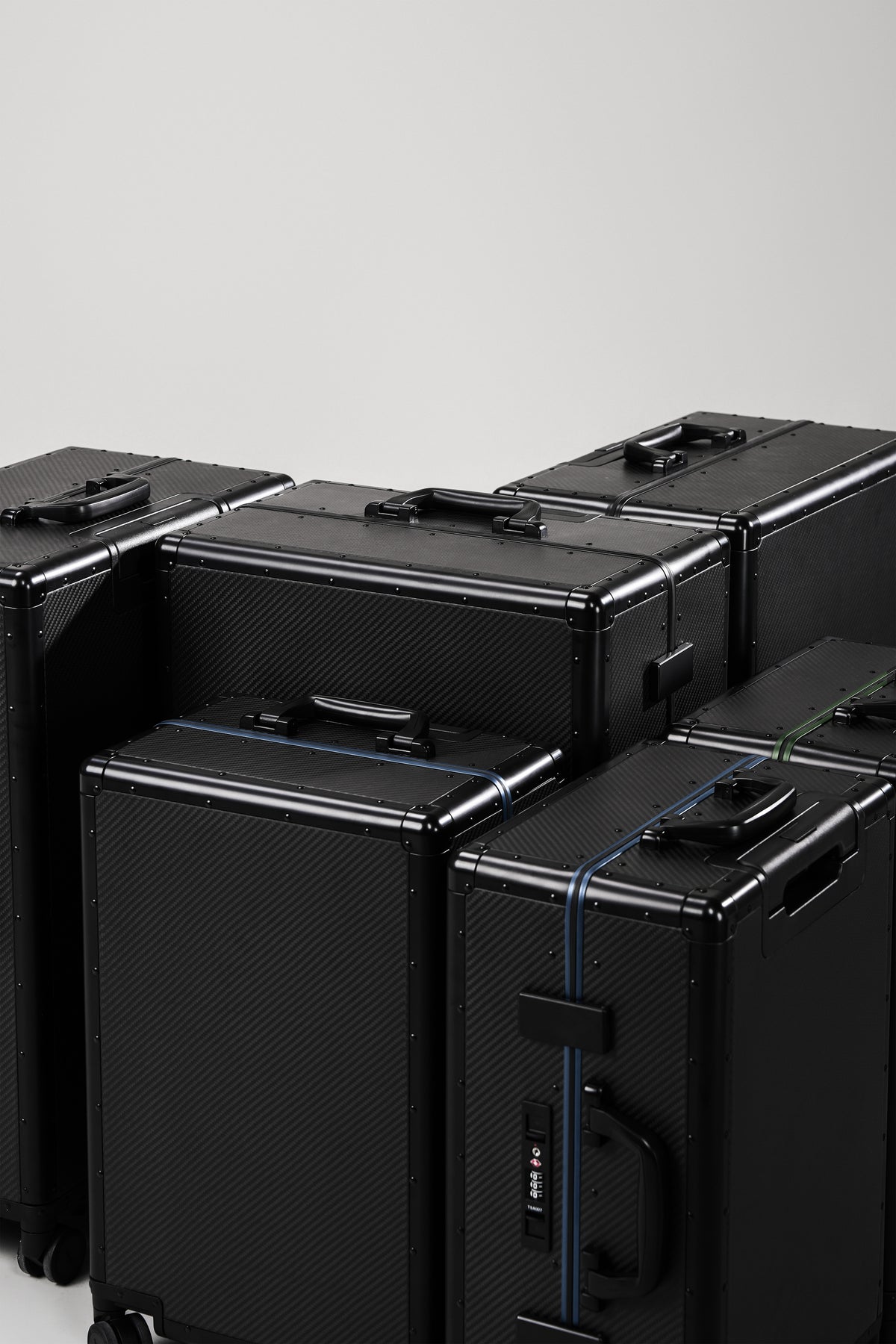
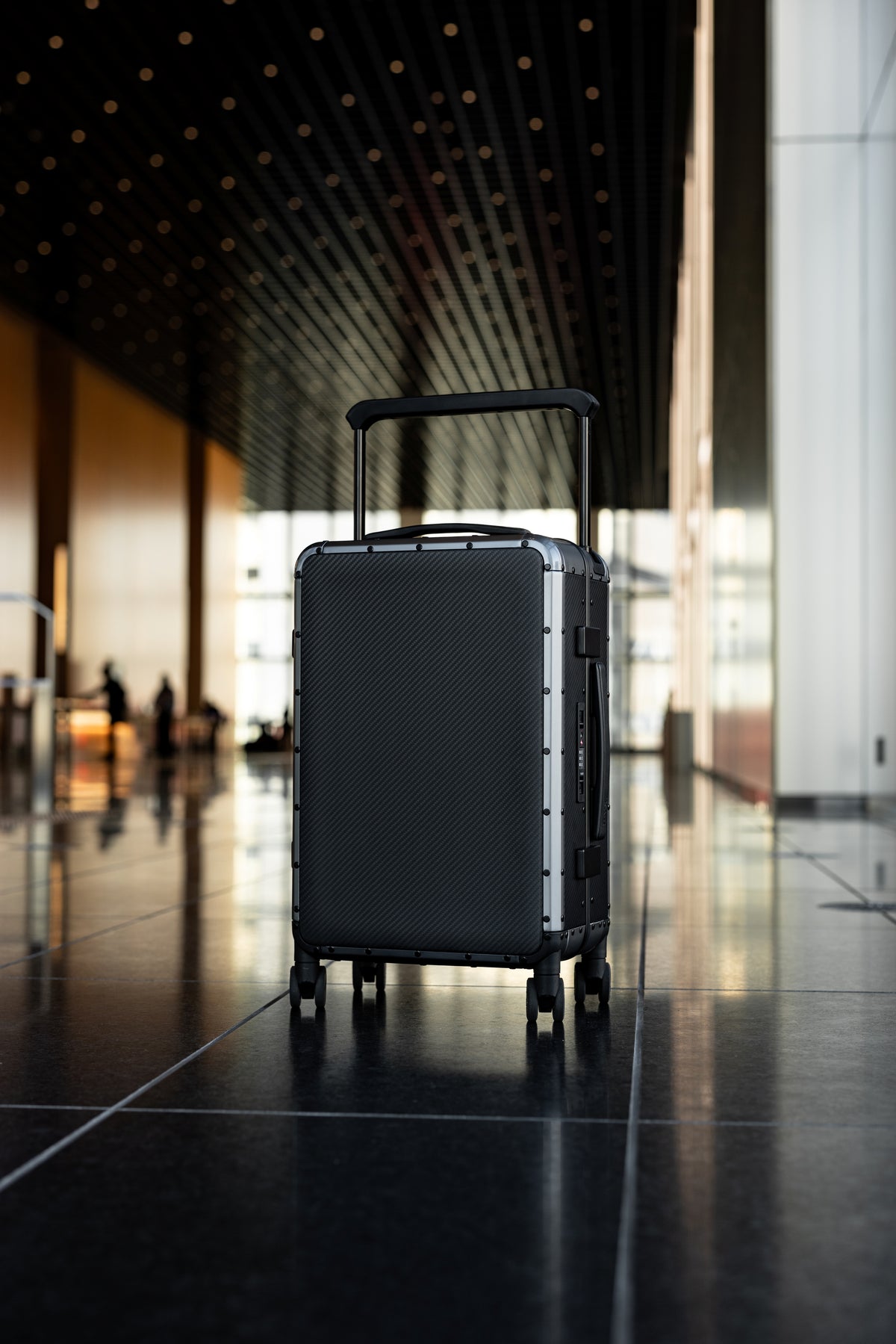


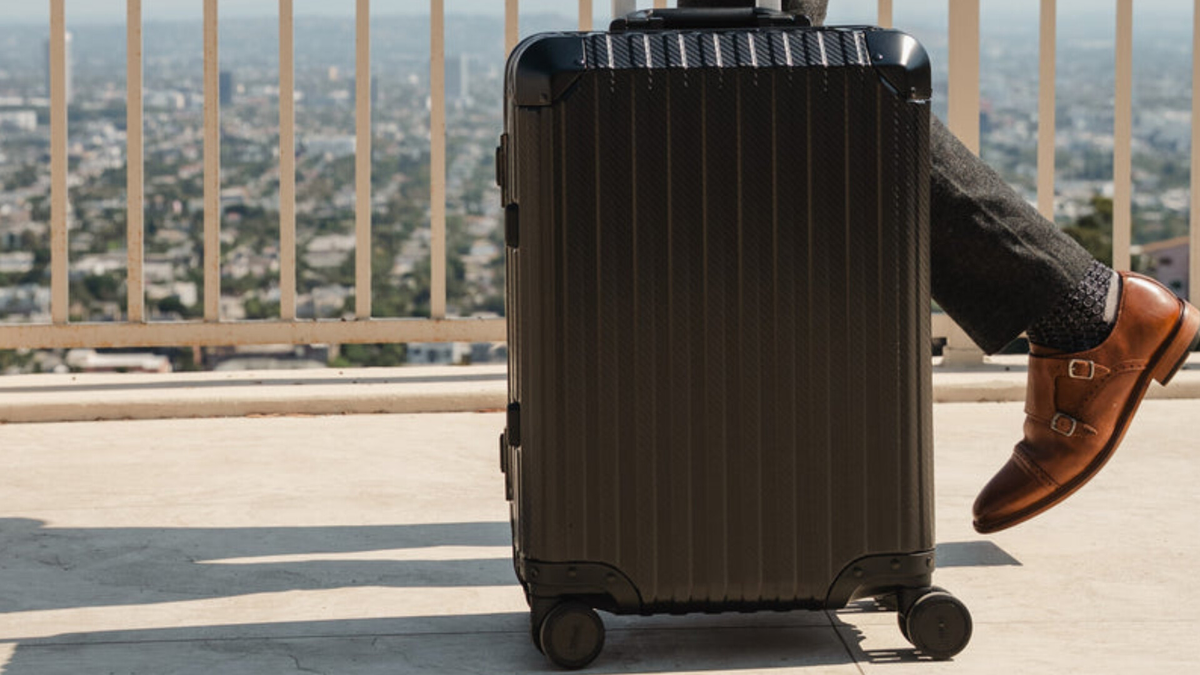

You do not have to pay RIMOWA pricing to buy a premium aluminum carry-on, but a lower price does not prove you are getting the same thing. RIMOWA is a useful benchmark rather than the only legitimate option, and the comparison worth making is product against product. Before you decide anything, get five things in front of you for each case you are considering.
- Current US price, and whether it is a sale price or the regular price.
- Full exterior dimensions, empty weight and capacity, with a note on whether wheels and handles are included.
- Frame and lock architecture, described from the product page rather than inferred from photos.
- Wheels, handle stages and interior organisation.
- Warranty scope, repair route and where service actually happens.
A higher price does not prove better performance either. Once you have those five fields, you can compare TREVA aluminum luggage against anything else in the category on the same basis.
RIMOWA Alternative Aluminum Luggage at a Glance

Five current aluminum carry-ons, same fields for each. This is a dated evidence snapshot rather than a ranking, and there are no scores or badges in it because no common test has been run across these products. Prices checked 8 September 2026, US market.
| Product | Current US price | Regular | Exterior | Weight | Capacity | Material | Frame and lock facts |
|---|---|---|---|---|---|---|---|
| MVST TREVA Carry-On | $399 | — | 21.7 × 14.8 × 8.7 in | 9.37 lb | 34 L | 5083-O aluminum alloy, MVST-published spec | Zipperless frame; TSA-approved locks |
| RIMOWA Original Cabin | $1,550 | — | 21.7 × 15.8 × 9.1 in | 9.5 lb | 35 L | Anodized aluminum | TSA-approved locks; stage-free handle and Multiwheel published |
| Away The Carry-On, Aluminum Edition, Silver | $562 sale | $625 | 21.5 × 13.5 × 9 in | 10.5 lb | 32 L | Aluminum hard shell | Dual TSA-approved combination locks |
| TUMI 19 Degree Aluminum Carry-On | $1,295 | — | 22 × 14 × 9 in | 11 lb | 31 L | Aluminum | Frame system opening; two TSA integrated locks |
| Sterling Pacific 40L Cabin Travel Case | $1,720 sale | $2,150 | 22.5 × 14 × 9 in | 12 lb | 40 L | 5000-series body, 5052 corners, 6063 frame, brand-published | Extruded aluminum frame; TSA double combination latch locks |
Two of those prices were promotional on the day they were checked, so the only durable statement is that these five products occupy different price points. Notice also that the most expensive case in the set is the heaviest, and the cheapest is neither the heaviest nor the lightest. Price is not tracking weight or capacity here.
What Counts as a Real RIMOWA Alternative
The Same Use Case
Compare a carry-on with a carry-on and a checked case with a checked case. Putting a RIMOWA Cabin next to somebody else's larger checked case and then drawing a value conclusion is how most comparison pages go wrong.
The Same Decision Criteria
Material, size, weight, capacity, closure, wheels, handles, service and price, measured the same way on both sides. The Federal Trade Commission's long-standing position on comparative advertising is that naming competitors is fine when the basis of the comparison is clearly identified, which is a reasonable standard to hold a shopping guide to as well.
An Independent Identity
A real alternative is an independently branded product that does a similar job. It is not a copy, a clone or a replica, and you are not looking for an identical RIMOWA at a lower price. You are comparing two different value propositions.

Why RIMOWA Costs What It Does
RIMOWA's Original Cabin page publishes a set of observable facts: anodized aluminum construction, a lifetime guarantee, a stage-free telescopic handle, the Multiwheel system, TSA-approved locks, a Flex Divider, and its dimensions, weight and capacity. Those are things you can check and compare.
What is not published anywhere is how the price breaks down. Manufacturing, materials, hardware, design, the service network, warranty scope, country of production and brand equity can all feed into what a case sells for, and no outside party can say which share belongs to which. So this article does not calculate a brand markup, because there is no evidence that would support the number.
The crucial question here is, which of those product and service differences actually matter to you, and are they all worth $1,151 on your particular trips?
What Premium Aluminum Luggage Costs Right Now
The spread across the five models above runs from $399 to $1,720 at current prices. Two things are worth understanding about that range before you use it.
- Sale prices are snapshots. Away and Sterling Pacific were both discounted on 8 September 2026, and a temporary discount is not a permanent price advantage.
- Colour, variant and stock all move the number. The prices above are for specific variants on specific pages.
- Recheck before you buy. Any percentage saving you calculate today can be wrong next week.
The defensible conclusion is narrow: these products sit at genuinely different price points, and the lowest-priced one is not automatically the weakest or the strongest.
TREVA and RIMOWA on Size, Weight and Capacity

These two are closer than the price gap suggests. The TREVA Carry-On specifications list 21.7 × 14.8 × 8.7 in, 9.37 lb and 34 L, with measurements including wheels. The RIMOWA Original Cabin lists 21.7 × 15.8 × 9.1 in, 9.5 lb and 35 L, with measurements including wheels and handles.
| Measurement | MVST TREVA Carry-On | RIMOWA Original Cabin | Difference |
|---|---|---|---|
| Exterior | 21.7 × 14.8 × 8.7 in | 21.7 × 15.8 × 9.1 in | Same height; RIMOWA is wider and deeper |
| Empty weight | 9.37 lb | 9.5 lb | 0.13 lb |
| Capacity | 34 L | 35 L | 1 L |
| Measurement basis | Includes wheels | Includes wheels and handles | Not identical, so treat exteriors as approximate |
| Current US price | $399 | $1,550 | $1,151 |
A 0.13 lb weight difference and 1 L of capacity are not enough on their own to establish that either case travels better. And because the two brands state their measurements on slightly different bases, even the exterior figures should be read as approximate rather than exact. What is not close is the price.
One more thing neither label settles. A branded Cabin or Carry-On name is not airline approved. Acceptance is carrier-specific, so compare each individual dimension against the rules of the airline you are actually flying.
TREVA and RIMOWA on Frame and Locks
Here is what each brand publishes. TREVA states a zipperless frame with TSA-approved locks. RIMOWA states TSA-approved locks. TUMI states a frame system opening with two TSA integrated combination locks. Sterling Pacific states an extruded aluminum frame with TSA double combination latch locks.
That is where the evidence stops, and it is worth being clear about why. A zipperless latch frame is an observable design choice. Whether it is harder to open without permission is a different question that needs a defined test, and no such test has been run across these products. So this article does not say any of them is more secure than another.
TSA recognition is also narrower than it sounds. The TSA explains that recognised locks let screening officers open certain bags for inspection without necessarily cutting the lock. That is inspection access. It is not an anti-theft rating, and every case in the comparison set has it.
Aluminum, Dents and Durability Claims
TREVA currently publishes a 5083-O aluminum alloy shell. Treat that as a product specification. The Aluminum Association can tell you what the 5xxx series is and where 5083 is typically used, but general alloy properties do not establish that one finished suitcase outperforms another. A shell is an alloy plus a gauge plus a geometry plus a frame, and only the first of those is on the page.
What is safe to say is how aluminum behaves. It dents, dings and scratches, and on a metal shell that is ordinary wear rather than failure. The line that matters is functional: whether the frame still seats, the lock still catches and the lid still closes flush. MVST publishes aluminum suitcase care guidance covering cleaning and handling.
You will see stronger durability claims than that on product pages across this category, including comparative percentages and pressure-test figures. This article does not repeat any of them, on either side. The FTC's substantiation policy is that objective product claims need a reasonable basis before they are published, and a comparative durability claim needs a comparison that was actually run.

Wheels and Handles, Published Features Rather Than Marketing Names
- TREVA: RIVA tri-bearing wheels and a multi-stage aluminum telescoping handle.
- RIMOWA: the Multiwheel system and a stage-free telescopic handle.
- TUMI: four dual recessed wheels and a three-stage telescoping handle.
- Sterling Pacific: 360-degree wheels and a retractable aluminum trolley.
Those are the published features, and the naming is proprietary rather than descriptive. Without a common rolling, noise and handle-wobble protocol across all four products, none of them can be called smoother, quieter or more stable than another. If wheel feel matters to you, this is a category where handling the case in person tells you more than any spec sheet will.
Warranty, Repair and Ownership Cost
Value does not end at checkout, but warranty comparisons only work if you read the actual scope. MVST's Limited Lifetime Warranty is the formal policy for covered luggage, and it is the wording to rely on rather than the shorter label that appears on some product pages. RIMOWA's current Original Cabin page states a lifetime guarantee.
Both use lifetime language, and that is exactly why you should read the exclusions rather than the headline. Check what counts as a defect, what counts as cosmetic wear, what airline damage is treated as, where repairs happen and who pays shipping. A cost-per-trip calculation is not worth much until the two warranty scopes are genuinely comparable.
Which Premium Aluminum Suitcase Should You Choose

- If the lowest current entry price is the priority, the price table is where to start, and TREVA is the lowest in this set at $399.
- If a specific handle system, wheel design or construction detail matters to you, let that carry explicit weight rather than treating it as a tiebreaker.
- If a worldwide service network or brand heritage is part of what you are buying, that is a legitimate reason to pay more, and it is not something a specification table measures.
- If you are unsure, compare the five fields from the top of this article on the exact models you are considering, then handle both cases if you can.
A lower-priced alternative can be the better fit for you without being identical to a RIMOWA and without being better than one.
Compare the TREVA Aluminum Collection
TREVA is MVST's aluminum line, with a zipperless frame, TSA-approved locks and a published 5083-O shell, starting at $399 for the carry-on. You can compare TREVA sizes and colors and check each measurement against your airline before you decide. That method will serve you better than any verdict. A lower-priced alternative can suit a particular buyer without being identical to RIMOWA or universally superior to it, and the reverse is equally true.
FAQs
Why is RIMOWA so expensive?
RIMOWA sits at a premium price point, and its product page publishes what you are buying: anodized aluminum construction, a lifetime guarantee, a stage-free telescopic handle, the Multiwheel system and TSA-approved locks. What no public source breaks down is how the price divides between manufacturing, materials, hardware, design, service network and brand equity. Anyone telling you a specific percentage is the logo is guessing. The more useful question is which of those product and service differences matter on your trips, and whether they justify the gap for you.
What is a good RIMOWA alternative aluminum suitcase?
A legitimate alternative is an independently branded aluminum case that does the same job, with verified dimensions, empty weight and capacity, published frame and lock details, warranty terms you have read, and a price you accept. The comparison set above includes the MVST TREVA Carry-On at $399, the Away Aluminum Edition at $562 on sale, the TUMI 19 Degree at $1,295 and the Sterling Pacific 40L at $1,720 on sale. Compare them on the same fields rather than looking for the closest visual match to a RIMOWA.
Where can I buy a RIMOWA dupe?
Reframe that search, because a dupe usually means either a counterfeit or a knockoff, and neither is worth your money. Counterfeits carry no warranty, no service and no guarantee the materials are what the listing claims. What you almost certainly want is an independently branded premium aluminum case that competes on its own specifications. Compare current price, exterior dimensions, empty weight, capacity, frame and lock design, wheels and warranty across a few legitimate brands. If you want a RIMOWA specifically, buy it from RIMOWA or an authorised retailer.
What do you get in a TREVA carry-on at $399?
The published specification is a 5083-O aluminum alloy shell, a zipperless frame with TSA-approved locks, RIVA tri-bearing wheels and a multi-stage aluminum telescoping handle, at 21.7 × 14.8 × 8.7 in, 34 L and 9.37 lb with wheels included. It is covered by MVST's Limited Lifetime Warranty, and you should read the exclusions rather than the label. What $399 does not buy is a guarantee of equivalence with cases costing three or four times more, because no common test has been run across them.
Does TREVA come in different sizes and colors?
Yes. TREVA is sold in carry-on, medium checked and large checked sizes, and in more than one finish including silver, black and gunmetal. All colors share the same published size specifications, so the finish is an aesthetic choice rather than a functional one. The sizes differ substantially in capacity and empty weight, so choose the size against your airline's rules and your actual packing rather than by name. Check the collection page for current availability by size and colour.
Will a TREVA aluminum suitcase dent or scratch?
Yes, and so will every aluminum suitcase, including the most expensive ones. Metal absorbs impact by deforming permanently rather than flexing back, so a checked aluminum case collects dents, dings and scuffs over time. That is ordinary wear rather than a fault. The distinction that matters is functional: whether the frame still seats, the lock still catches and the lid still closes flush. If all three hold, the case is working as designed. Read the warranty to see how cosmetic wear is treated before you buy.
What is 5083-O aluminum, and does the grade matter?
5083 is part of the 5xxx series of aluminum alloys, which are grouped by magnesium content, and the O designation refers to the temper. The Aluminum Association has run that naming system since 1954, and 5083 is best known in marine applications. MVST publishes 5083-O as the TREVA shell specification. Here is the honest limit though: a grade tells you what the metal is, not how thick the shell is or how the corners are built, and those decide how a case handles an impact. Treat the grade as information rather than proof.
What does a zipperless frame actually change?
It changes how the case opens and closes. Instead of a zipper running around the perimeter, the two halves meet on a rigid frame and close with latches, which is why framed aluminum cases feel solid when you shut them. TREVA uses a zipperless frame with TSA-approved locks. What cannot be claimed without a defined test is that this makes a case harder to open without permission, so treat a zipperless frame as a construction and feel preference rather than a security rating.
What does the MVST warranty cover on a TREVA suitcase?
MVST's formal policy is a Limited Lifetime Warranty on covered luggage, and that is the wording to work from rather than the shorter label some product pages display. Before you buy, read it for four things specifically: what counts as a manufacturing defect, how cosmetic scratches and dents are treated, how airline damage is handled, and where repairs take place and who pays shipping. Warranty headlines across this whole category use similar lifetime language, and the exclusions are where the real difference sits.
How do you look after an aluminum suitcase?
Keep it simple and check the brand's own guidance first, since finishes differ. Clean the shell with a soft damp cloth rather than abrasive pads or solvents, which can mark an anodised surface. Wipe grit off the wheels and out of the housings, because that is what wears bearings. Keep the lock mechanism dry and work it occasionally. Expect scuffs and accept them as part of a metal case. MVST publishes product care guidance covering cleaning and handling for the TREVA line.
Sources
Sources and references
- [1]Federal Trade Commission, Statement of Policy Regarding Comparative Advertising, Federal Trade Commission. Comparative advertising may name competitors where the bases of comparison are clearly identified, provided it is truthful and non-deceptive. Accessed 8 September 2026.
- [2]Federal Trade Commission, Policy Statement Regarding Advertising Substantiation, Federal Trade Commission. Advertisers must have a reasonable basis for express and implied objective product claims before those claims are disseminated. Accessed 8 September 2026.
- [3]John Weritz, vice president for standards and technology, The Aluminum Association. Wrought alloy and temper designation system, and 5xxx-series context. Neutral alloy background only; it does not establish suitcase-level performance. Accessed 8 September 2026.
- [4]Transportation Security Administration, Travel Tips, baggage and recognised locks, US Department of Homeland Security. Recognised locks allow screening officers to open certain bags for inspection without necessarily cutting the lock. Inspection access, not an anti-theft rating. Accessed 8 September 2026.
Stay in the know
Sizing updates, packing systems, and the deals we think are worth it. No more than twice a month.
By clicking submit, you agree to our Privacy Policy.