


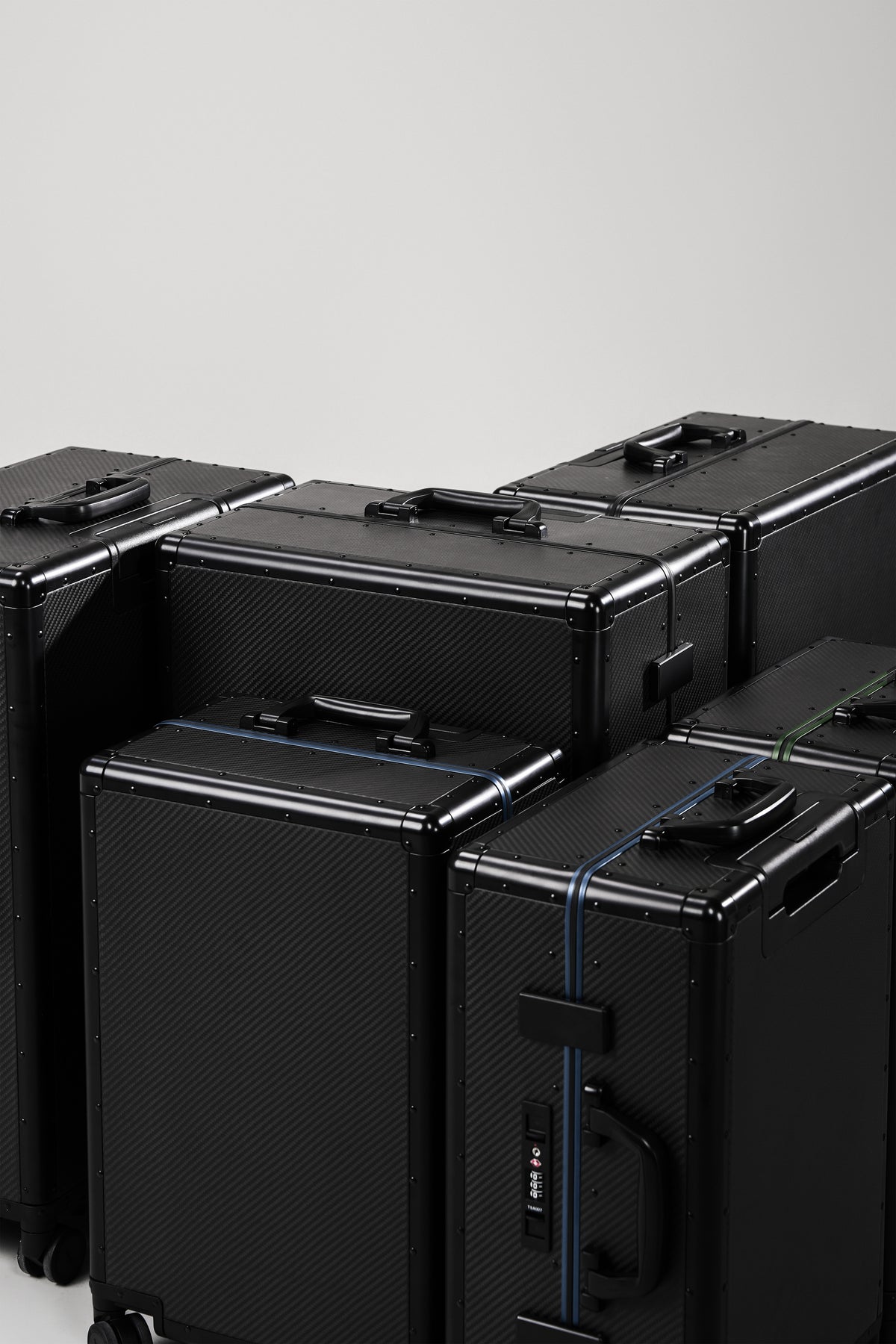
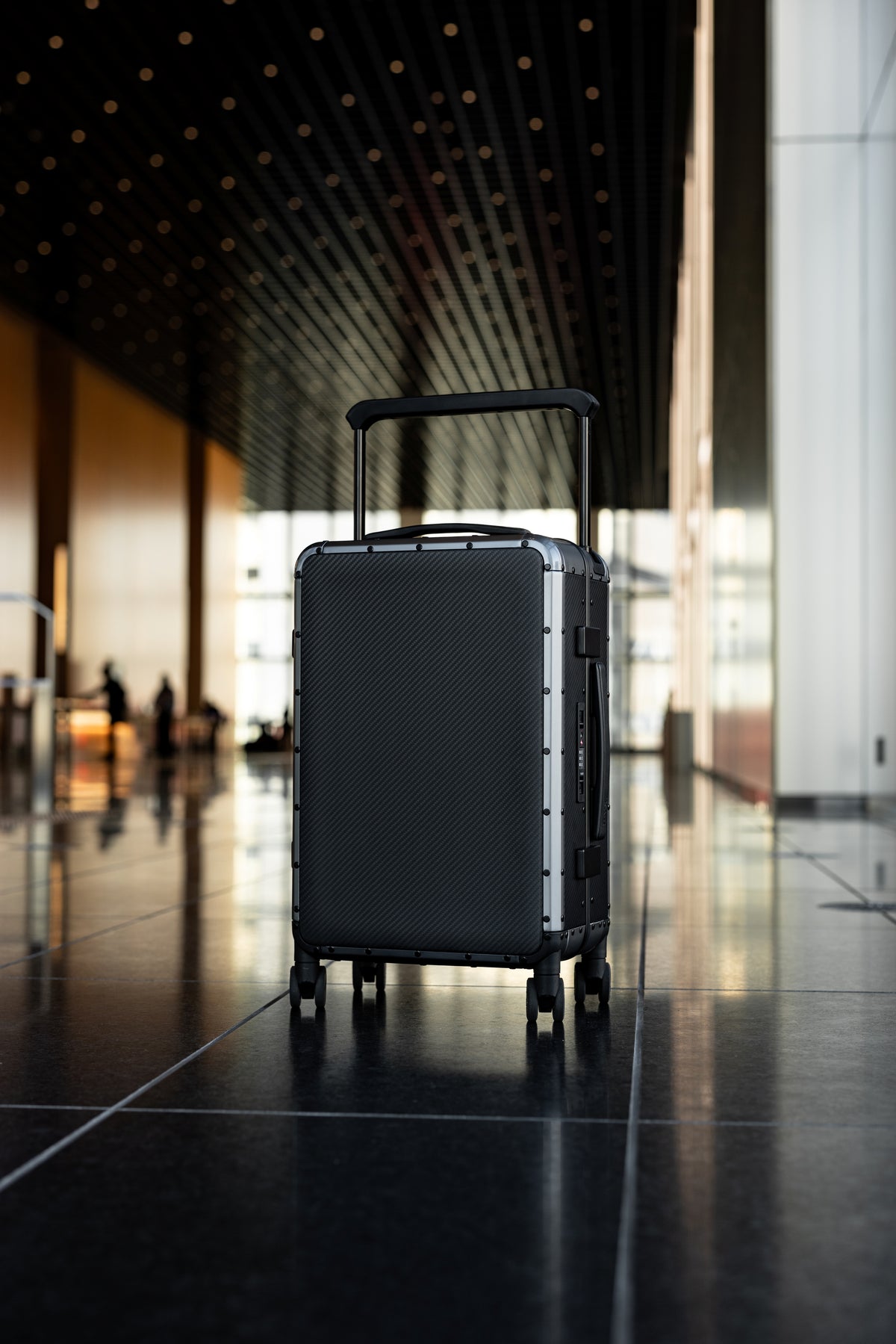




5083-O is a wrought aluminum alloy from the 5xxx series, which is the aluminum-magnesium family, supplied in the O or annealed temper. The four-digit number identifies a registered range of chemical composition. The letter identifies the condition the metal is in. Both can matter in a formed metal suitcase shell, because chemistry and temper influence how the metal is worked, how it resists corrosion and how it responds to load. What the designation cannot do is tell you how a finished suitcase handles dents, drops or ten years of baggage handling. That takes product-level construction and test evidence.
If you want the product-level details rather than the material ones, those sit with the TREVA Aluminum Collection.
What the Name 5083-O Actually Means
What 5083 Identifies
The first digit places the alloy in a family. A 5 means the principal alloying element is magnesium. The remaining digits identify one specific registered alloy within that family. The Aluminum Association has administered this wrought alloy designation system since 1954, and the American National Standards Institute committee ASC H35 oversees the standards behind it.
What O Identifies
O is a temper designation, not part of the chemistry. It means annealed: the metal has been heat treated to its softest, most workable condition. The same alloy can be supplied in several tempers, and each one behaves differently under load even though the chemistry is identical.
Why Alloy and Temper Are Not Interchangeable
Read 5083-O as two facts rather than one phrase. The alloy tells you what the metal is made of. The temper tells you what state it is in. A supplier quoting only 5083 has told you half of what you need, and a supplier quoting only aluminum alloy has told you almost nothing.
What Is in 5083 Aluminum
Magnesium is the primary alloying agent across the 5xxx series, with manganese and chromium added in smaller amounts. The table below gives the registered composition limits for 5083. Treat these as the published range rather than a measurement of any particular sheet of metal, and confirm them against the current Aluminum Association registration record before relying on them.
| Element | 5083 limit | What it does |
|---|---|---|
| Magnesium (Mg) | 4.0 to 4.9% | The primary alloying element in the 5xxx family |
| Manganese (Mn) | 0.40 to 1.0% | Registered composition range; helps stabilise grain structure |
| Chromium (Cr) | 0.05 to 0.25% | Registered composition range |
| Silicon (Si) | 0.40% max | Composition limit |
| Iron (Fe) | 0.40% max | Composition limit |
| Copper (Cu) | 0.10% max | Composition limit |
| Zinc (Zn) | 0.25% max | Composition limit |
| Titanium (Ti) | 0.15% max | Composition limit |
| Aluminum (Al) | Remainder | Balance of the registered composition |
One limit worth stating plainly. A registered composition range describes what 5083 is allowed to contain. It does not prove that any specific suitcase shell was made from metal meeting that range. That link is made by a supplier certificate tied to actual stock, not by a datasheet found online.
How 5083-O Differs From the 5083-H Tempers
The O Temper
Annealed material is generally the most ductile and formable condition of a given alloy, and generally the lowest in strength compared with strain-hardened versions of the same alloy in the same product form. That combination is useful when metal has to be shaped.
The H Tempers
H designations cover strain-hardened material, where strength has been raised by cold working. There are many of them, such as H116 and H321, and the properties depend on the exact designation and the processing history behind it.
Two cautions on comparing them. Any strength, elongation or hardness figures have to come from the same specification, product form and thickness before the comparison means anything. And neither temper is better in the abstract. O is not weak and H is not superior. The engineering question is whether the chosen temper suits the forming process and the final geometry, which is a design decision rather than a ranking.

Why 5083 Is Used in Marine and Transport Applications
The Aluminum Association describes 5xxx alloys as having moderate to high strength along with good weldability and resistance to corrosion in marine environments, which is why the family appears in building and construction, storage tanks, pressure vessels and marine work. It names 5083 specifically for marine applications, and notes that the US military's Bradley Fighting Vehicle is built using 5083 alongside 7xxx series aluminum. These alloys are not heat treatable, so they are strengthened by cold working rather than by heat treatment.
That is the real industry context, and it is also where most luggage marketing overreaches. Ships and armoured vehicles using an alloy do not make a suitcase made from that alloy more durable than one that is not. Application context is not finished-product validation.
Marine-grade deserves the same skepticism. It is an informal descriptive phrase rather than a complete engineering specification. A useful disclosure names the alloy, the temper and the applicable standard. Marine-grade names none of them.
Why an Annealed 5xxx Sheet Can Be Relevant to a Suitcase Shell
There are two honest reasons the combination can matter, both stated as relevance rather than as proof of performance.
- Forming: A suitcase shell is not flat. Getting sheet metal into a shell geometry with consistent wall thickness and without cracking requires material that will move, and an annealed condition is the most formable state a given alloy comes in.
- Corrosion Behaviour: A suitcase spends its life exposed to humidity, rain, road salt, hand contact and repeated abrasion, and the 5xxx family's corrosion resistance is one of the reasons it is specified for marine service.
What the alloy and temper do not control is most of what you actually experience. Shell thickness, rib and panel geometry, the forming method, corner reinforcement, the frame, the joints, the surface treatment and how load travels through the case all shape how a suitcase survives a baggage belt. The metal is one input among many.
Which Material Claim Tells You More
Luggage material wording varies enormously in how much it actually discloses. The table sorts the common phrases by specificity, which is a more useful way to read a product page than treating every technical-sounding term as equivalent.
| Claim | Specificity | What it tells you | What it does not prove |
|---|---|---|---|
| 5083-O | Specific | A registered alloy designation plus the annealed temper | Still needs product-linked verification for the actual stock |
| 5083 | Specific alloy | Identifies the registered chemistry range | Does not state the temper |
| 5xxx series | Family level | Magnesium is the primary alloying element | Does not identify which alloy |
| Aluminum alloy | Broad | A material category only | No chemistry, no temper, no product form |
| Aircraft-grade | Broad descriptor | Application or marketing language unless an alloy and specification are named | Not a formal grade on its own |
| Marine-grade | Informal descriptor | Can describe alloys commonly used in marine service | Not a complete alloy plus temper plus standard |
| Anodized aluminum | Process descriptor | A surface treatment applied to aluminum | Does not identify the base alloy at all |
More specific wording is better disclosure. It is still not a performance score, and even a precise alloy name sits several steps away from how a suitcase behaves.
What 5083-O Does Not Tell You About a Suitcase
- It does not tell you the shell thickness or the panel geometry.
- It does not prove the forming method, or that the shell is made in one piece.
- It does not prove anodising, coating thickness or how the finish will wear.
- It does not determine how the corners, frame, hinges, lock, handle or wheels perform.
- It does not establish that a case is dent-proof, crack-proof, waterproof, theft-proof or good for a lifetime.
- It does not prove that any suitcase is stronger, lighter or more durable than a RIMOWA, TUMI, Away or Sterling Pacific case.
Every one of those is a separate question with separate evidence behind it. Treating the alloy name as the answer to all of them is the most common error in this category.
How to Verify a 5083-O Luggage Claim

Here is the sequence to work through, whether you are a shopper reading a product page or a brand preparing to publish one.
- Check the exact alloy designation. You want a four-digit number such as 5083, not 5xxx and not premium aluminum.
- Check the temper. O has to be stated and connected to the material actually used, not inferred from a marketing label. The Teal Sheets registration record is the reference for designations and composition limits.
- Check the product form and thickness. Sheet, coil and plate are different things, and the gauge should match the shell being described.
- Check the referenced standard. Look for an Aluminum Association or ANSI H35.1 designation, an ASTM B209 or B209M sheet and plate specification, or a SAE material specification such as AMS4056 where it applies.
- Check the certificate. A mill test certificate, certificate of conformance or certificate of analysis should tie the specification to the actual stock, ideally with heat, lot or batch traceability.
- Check the finish separately. Anodising and coatings need their own documentation, because the alloy designation says nothing about them.
- Check the engineering conclusion. A named reviewer should state what the evidence permits the brand to claim publicly and what it does not. The Federal Trade Commission's position is that objective product claims need a reasonable basis before they are published, which is the standard any material claim should meet.
The short version, and the one worth remembering: a marketing label is not a substitute for grade plus temper plus product-linked evidence.
How Aluminum Luggage Brands Describe Their Materials
Disclosure depth varies widely across the category. The table compares how five brands describe their aluminum on their current official product pages, checked 9 September 2026. It compares wording, not quality, and being more specific is not the same as being better made.
| Product | Published material wording | How to read it |
|---|---|---|
| MVST TREVA Carry-On | Product page states a 5083-O aluminum alloy shell | The most specific wording in this set. Alloy plus temper, pending supplier and engineering verification |
| Sterling Pacific 40L Cabin | 5000-series body, 5052 corners, A380 housings, 6063 frame | Component-level disclosure, which is unusually detailed. Different alloys for different parts |
| RIMOWA Original Cabin | High-end anodized aluminum | Discloses the surface treatment. No shell alloy number on the checked page |
| TUMI 19 Degree Aluminum Carry-On | Aluminum, with aircraft-grade language | A broad application descriptor. No exact shell alloy on the checked page |
| Away Aluminum Carry-On | Aluminum hard shell | Material category only. No alloy number on the checked page |
The pattern is worth noting. Two of these brands name specific alloys, two use broad descriptors and one names only the finish. Better disclosure lets you verify a claim. It does not by itself prove a better suitcase, and a brand that discloses less is not necessarily building worse.

What This Means for TREVA
The current TREVA product page states a 5083-O aluminum alloy shell, which is the most specific material disclosure in the comparison set above. Under MVST's own evidence standard, a product page statement is a published claim rather than independent verification, so this article treats it as a disclosure example and not as a confirmed engineering fact.
That may read as unusually cautious for a brand writing about its own material. It is the same standard this article asks readers to apply to everyone else, and applying it selectively would make the rest of the page worthless.
Conclusion

5083-O tells you two real things: the alloy is a registered 5xxx aluminum-magnesium composition, and the metal is in the annealed condition. Neither fact establishes that a suitcase made from it will outlast another one. Verify the grade, the temper, the product form and the engineering evidence, then compare the whole design: shell thickness, frame, corners, hardware, finish and warranty. For the product-level specifications, the TREVA Aluminum Collection publishes size, capacity, weight, wheels, lock and handle details by model.
FAQs
What is 5083-O aluminum?
5083-O identifies both an aluminum alloy and its condition. 5083 is an aluminum-magnesium alloy in the 5xxx series; O means the metal is annealed for high formability.
What does the O temper mean in aluminum?
The O temper means annealed. It describes the condition of the material, not its chemistry. Any strength figure is meaningful only when the alloy, product form, thickness and applicable standard are also stated.
Is 5083-O the same as marine-grade aluminum?
No. 5083 is widely used in marine applications, but "marine-grade" is an informal description rather than a complete specification. A verifiable claim should identify the alloy, temper and applicable standard.
Is aluminum luggage better than polycarbonate luggage?
Neither is universally better:
- Aluminum: rigid and often zipperless, but usually heavier and more likely to show dents and scratches.
- Polycarbonate: usually lighter and able to flex, but it can crack when overloaded or severely impacted.
Compare the specific models on empty weight, capacity, closure, warranty and repair support.
Are aluminum suitcases good for frequent travel?
Yes, when rigid construction matters more than minimum weight. Check the exact dimensions, empty weight, wheels, handle, warranty and repair options, and expect visible cosmetic wear over time.
Is aluminum luggage heavy?
Generally, yes. Full-aluminum cases often weigh more than comparable polycarbonate or fabric luggage, although the complete design matters. Always check the published empty weight for the exact model and size.
What are the disadvantages of aluminum suitcases?
The main disadvantages are:
- Higher empty weight than many plastic or fabric cases.
- Fixed capacity with little or no expansion.
- Visible dents, dings and scratches.
- Higher purchase prices on many models.
- Possible closure or frame problems if an impact causes structural deformation.
Why do people choose aluminum luggage?
Common reasons include:
- A rigid, structured shell.
- A framed zipperless closure on many models.
- The appearance and feel of real metal.
- Hardware and components that may be repairable or replaceable.
Confirm these features on the exact product; they are not guaranteed by the word "aluminum."
How should you choose an aluminum metal suitcase?
Use this order:
- Confirm the exterior dimensions, including wheels and handles.
- Compare the empty weight with your usual baggage allowance.
- Verify the shell material, frame, lock, wheels and handle design.
- Read the warranty, repair terms and exclusions.
- Check the packed case against the rules of the airline operating your flight.
What should you verify before trusting a 5083-O or aircraft-grade luggage claim?
Do not rely on the marketing phrase alone. Verify:
- The exact alloy number and temper.
- The product form and material thickness.
- A recognized material specification.
- A supplier certificate tied to the material actually used.
- Engineering evidence that explains what the specification supports.
Sources
Sources and references
- [1]The Aluminum Association, Standards, including the wrought alloy designation system and 5xxx-series context, The Aluminum Association. Magnesium as the primary 5xxx alloying agent; 5xxx corrosion resistance and weldability; 5083 in marine applications and in the US military's Bradley Fighting Vehicle; non-heat-treatable alloys strengthened by cold working; ANSI ASC H35 oversight. Accessed 9 September 2026.
- [2]The Aluminum Association, Addendum to the Teal Sheets, International Alloy Designations and Chemical Composition Limits for Wrought Aluminum and Wrought Aluminum Alloys, The Aluminum Association. Registration record for wrought alloy composition limits. Confirm against the current edition on publication day. Accessed 9 September 2026.
- [3]The Aluminum Association, Teal Sheets registration publication, via the ANSI Webstore, American National Standards Institute. The registration publication itself, cited so readers can locate the primary record. Paywalled beyond the listing. Accessed 9 September 2026.
- [4]Federal Trade Commission, Policy Statement Regarding Advertising Substantiation, Federal Trade Commission. Advertisers must have a reasonable basis for express and implied objective product claims before those claims are disseminated. Cited as the standard a material claim should meet. Accessed 9 September 2026.
Stay in the know
Sizing updates, packing systems, and the deals we think are worth it. No more than twice a month.
By clicking submit, you agree to our Privacy Policy.