


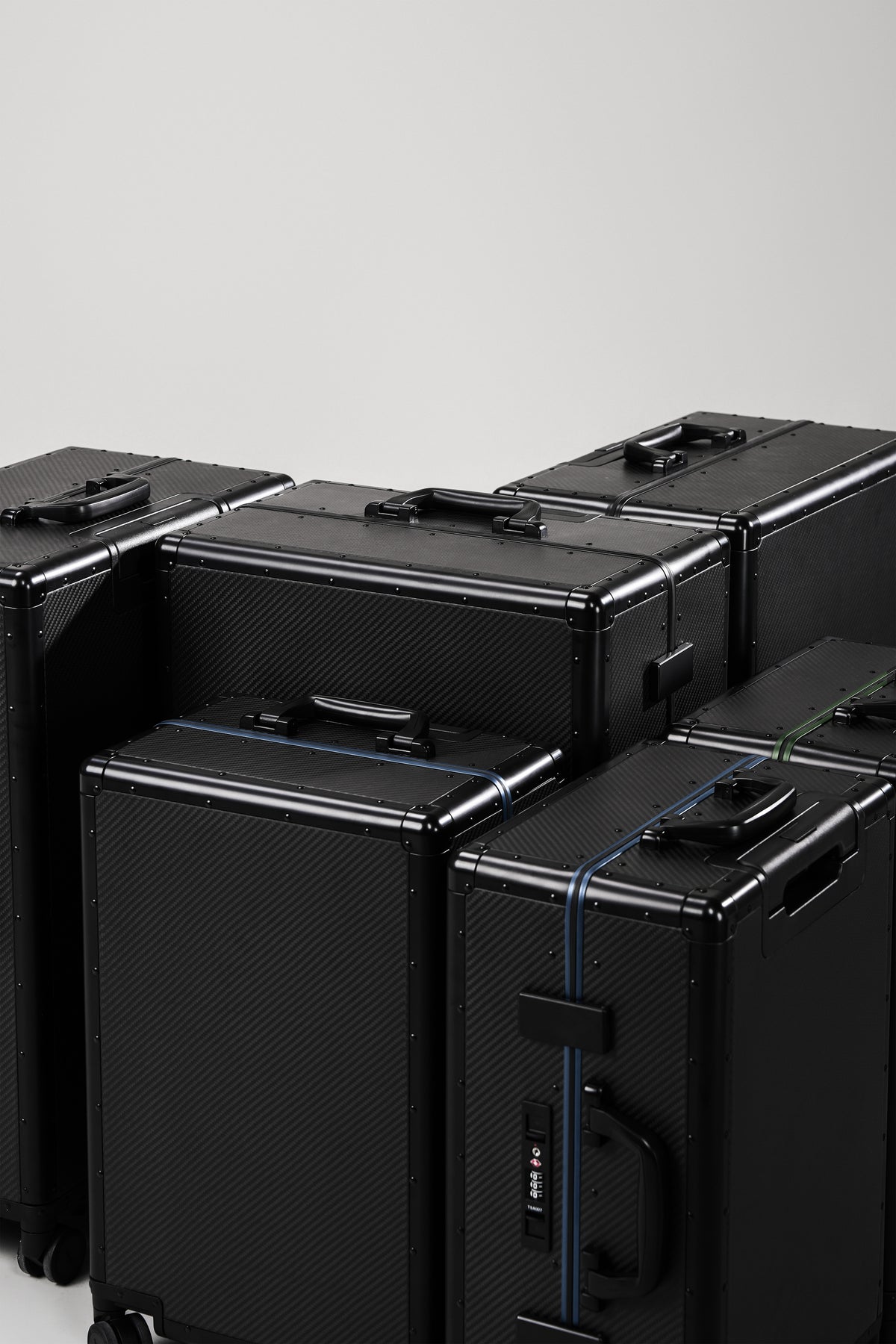
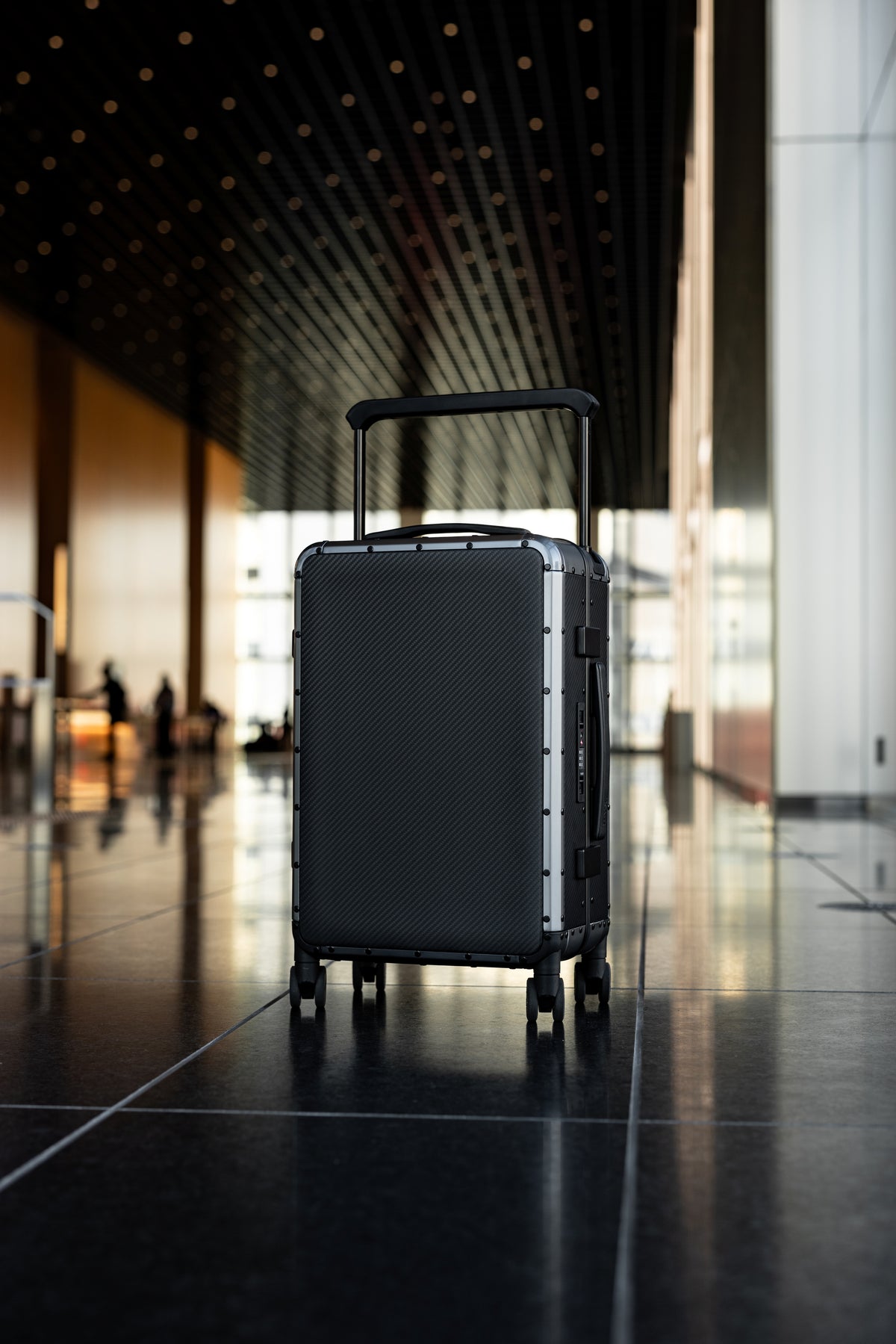


If you hit the aluminum suitcase hard enough, it can get scuffed, dented or crushed in one place, without losing function. Evidence of denting is that the metal has been permanently bent by a local load. Just because the case has dented, it does not automatically mean the case has failed. The real determinant is the type of aluminum suitcase that is used, the alloy and temper, the thickness of the shell, the shape of the shell, the perimeter frame and corners, and the exact spot where the impact occurred. A deep impact may also cause a warpage of the frame, pull the latch out of alignment or crack the shell, which are other issues.
For the current published specifications on MVST's metal cases, see TREVA aluminum luggage.
Dents vs Damage at a Glance
Work through this before reading the construction detail. It is not an engineering diagnosis, it's a consumer inspection system. Do not consider it a fine case if the shell, frame, locks, handles or wheels are not functioning properly.
| Observed condition | What it can indicate | Functional check | Next step |
|---|---|---|---|
| Light scuff or scratch | Surface wear | Check the finish only. The case should align and operate normally | Clean per the care guide. Usually cosmetic |
| Small shallow dent | Localized permanent deformation may have occurred | Open and close the case. Inspect the frame gap, the locks and the inside of the shell | Monitor. Cosmetic if function is unchanged |
| Dent beside a lock, the frame or a joint | Higher risk of an alignment change | Check latch engagement, the perimeter gap or seal, and any nearby joint | Service assessment if alignment has changed |
| Severe buckling or a deep crease | May affect shell or frame geometry | Inspect the shell edge, frame, mounts and closure | Stop treating it as cosmetic. Seek service |
| Crack or break | Shell integrity failure | Do not rely on a visual check alone | Use the warranty, service or airline claim path as applicable |
| Wheel or handle mount damage | Functional hardware damage | Roll the case, lift it and extend the handle carefully | Repair or service required if unusable |
On warranty specifically, MVST's formal policy excludes cosmetic dents, dings and scratches, and covers cracks, breaks and unusable wheels or handles as manufacturing defects subject to its terms.
How an Aluminum Suitcase Shell Is Built

The Shell Is Only Part of the Case
Imagine that the aluminum suitcase is an assembly. Both halves of the shell are placed on a frame around the perimeter, corner guards are added to the corners, and the locks, wheels, handles and lining are then separately installed. How well those pieces are put together matters as much on a rough baggage belt as the metal does.
Shells Made From More Than One Piece
Plenty of aluminum shells aren’t pressed from one sheet. They’re made from sections that meet each other and the frame, and those joins carry load like any other part of the structure. TREVA’s shell isn’t made as a single piece either. What MVST publishes is the material and the parts around it: a 5083-O aluminum alloy shell, reinforced corner guards and a zipperless frame. Our guide to what 5083-O aluminum is explains the alloy and temper.
What the Construction Words Don’t Tell You
Seamless, monocoque, unibody: you’ll see words like these in luggage copy. They describe how a shell was made. They don't specify if it resists dents, if it will survive a drop, if it will keep water out, or if it will last for 10 years, and a brand that promises to have them should be able to demonstrate what they mean on their own product.

How Aluminum Suitcase Construction Handles an Impact

Localized Load
Concentrated load is caused by a corner strike or by a contact or a load from another bag against the shell. The location of that load is as important as the intensity of that load.
Elastic Versus Permanent Deformation
Some deformation recovers when the force is removed. Past a certain point some of the shape change stays. This is a general elastic-plastic behaviour under the action of a localised indenter as exemplified by Instrumented indentation research on rolled aluminum sheet. Note the scope: that used an AA 3003-H14 sheet, a different alloy and temper than she would find in a suitcase, so it supports the mechanism and no numbers.
How the Frame and Corners Share Load
The shell, perimeter frame, corner guards, hardware and the seams between the frames are a system. Giving it protection credit to the shell itself is a mistake and is the most frequent mistake in the aluminum luggage marketing.
Why a Dent May Remain Visible
A local permanent shape change remains in the panel even during the case opening, closing, rolling and protection of the protected items. There is not a direct correlation between visible and functional.
When Impact Becomes Functional Damage
When a frame is distorted, latches are misaligned, corners are broken, the shell is cracked, a joint pulls out or the wheel and handle mounts are damaged, it's no longer a cosmetic wear. That is the limit of knowledge that you need to know before you have to.
Cosmetic Dent vs Structural or Functional Damage

Cosmetic
With the case still functioning and aligning properly, scuffs, scratches and small dents/dings. According to MVST Product Care, scratches, scuffs and small dents can occur during normal use. How to care for an aluminum suitcase covers cleaning and minor marks.
Functional
The latch does not align, the frame is no longer flush, a wheel housing has moved, a handle mount moves, a shell edge or a joint is separated or the inside is exposed.
Structural
A crack or break that is visible or causing significant buckling at a mounting point or that is altered so it cannot be used as intended.
The Five-Minute Post-Flight Check

Run this after any hard landing on the belt, before you leave the airport if you can.
- Examine around the edge around the entire perimeter of the gap and along any visible joints to see if the two parts are still level.
- Operate both locks or latches and check they run smoothly.
- Stretch and pull the telescoping handle all the way out and side to side, checking for new side to side movement.
- Pull each carry handle and ensure that the mount has not moved.
- Rotate all four wheels and watch for grinding or loss of straightness of the wheel.
- Open up the case and check the dented area from inside and out.
No dent should be called harmless until those checks pass. That is the whole distinction this section exists to give you.
What Actually Controls Dent Resistance

Alloy and Temper
The word aluminum does not indicate the properties of the material; the properties depend on the particular alloy and the particular temper. The designation system and the mechanical property limits used to determine the designation are published by The Aluminum Association. The TREVA 5083-O aluminum suitcase page states that the alloy and temper, but this is a statement of the case's specifications and not a performance conclusion.
Shell Thickness
The thickness has a significant influence on the stiffness of the panel in the local region and on the response to a point load. It's also the number that is most frequently missing on a product page. Where a brand does publish one, ask where it was measured, because a rolled or reinforced edge is thicker than an open panel.
Shell Geometry
Curves, ribs, stamped forms and flat panels spread load differently. Grooves and contours are a design feature, and calling them reinforcement requires verification for that specific shell rather than an assumption.
Perimeter Frame, Joints and Reinforced Corners
These are part of the construction system and they carry load away from the panel, and so do the joints where shell sections meet the frame. Their presence is a component fact. It is not a test rating, and no quantity of impact benefit should be attached to it without data.
Impact Location and Loaded State
A hit near an edge, a corner, a joint, a wheel mount or a latch can produce a very different result from the same hit at the centre of a broad panel. Whether the case was packed full also changes how load travels through it.
Why Joints Matter for Dents and Repair
Joints are the part of an aluminum case most worth understanding. The metal at the joining of two shell sections, or at the interface of the shell and the frame, stiffens or turns, which concentrates the load of a knock from that impact. So if there is a dent near a joint, treat it as if it were near a latch: open the case, close the case and make sure the line is still even.
Joints can also make repair easier, if the manufacturer actually offers section or part replacement for your model. Some brands do and some don’t, so it’s worth asking before you buy rather than after a bad flight. What the number of joints won’t tell you is how durable the case is. That is yet to be determined depending on the alloy, the thickness, the shape, the quality of the joints, the hardware and more. No one can say that one way of construction is stronger than the other without testing them in the same exact conditions.
Can a Dented Aluminum Suitcase Be Repaired
Cosmetic Dents
Generally, brands consider dents and dings to be cosmetic wear. It is very difficult to determine if a particular dent can be repaired, as it depends on the location, depth and finish of the dent and no honest answer gives a promise of dent removal without leaving marks or altering alignment.
Functional Deformation
If the frame, joint, latches, or wheel mounts/handle mounts are damaged, the case requires a repair by the manufacturer or a qualified repair shop. If they can replace it for your model, it's likely that you can, too. This is NOT something to be judged from a picture.
Do Not Attempt DIY Dent Removal
A home dented out with a hammer or pushed may hurt the finish, cause a stress concentration at the dented area, cause warpage of the frame or open up a joint. The negative outweighs the positive.
Airline Damage Versus Product Defect
These run on completely separate tracks. According to The US Department of Transportation, if the damage happens while the bag is in the airline's custody, the airline is responsible for repairing or reimbursing the baggage; the passenger must make a claim as soon as possible; and airlines are not liable for any prior damage to the bag. If a bag arrives visibly damaged, and a report is not made, notify the airport before leaving, and make a report. MVST's Limited Lifetime Warranty applies to manufacturing defects under its own terms, and is unrelated to transit damage.
Regarding the service model, RIMOWA has a worldwide care system and evaluates the non-functional cosmetic wear for repair alternatives. That is useful context for what a premium aluminum service path can look like, and readers searching rimowa repair are usually looking for exactly that. It is not a recommendation and this article is not a RIMOWA service guide. For a price and spec comparison of premium aluminum cases, see RIMOWA alternative aluminum luggage.

Premium Aluminum Luggage Construction and Wear Examples

Four current aluminum carry-ons and how each brand describes construction and wear. These are examples, not rankings, and they were not tested under any common protocol. The products differ in shell design, size, weight, hardware, service model and test history. Verified 12 September 2026.
| Product | Construction wording | Exterior and capacity | Weight | Price | Wear and repair context |
|---|---|---|---|---|---|
| MVST TREVA Carry-On | 5083-O aluminum alloy shell; reinforced corner guards; zipperless frame | 21.7 × 14.8 × 8.7 in; 34 L | 9.37 lb | $399 | Product Care says scratches, scuffs and small dents can develop. Formal warranty excludes cosmetic dents and dings, and covers listed manufacturing defects |
| RIMOWA Original Cabin | Anodized aluminum; framed lock closure | 21.7 × 15.7 × 9.1 in; 35 L | 9.5 lb | $1,550 | Lifetime guarantee and a global care network. Non-functional cosmetic wear can be assessed for repair options |
| TUMI 19 Degree Aluminum International Carry-On | Aluminum; frame-system opening; two TSA integrated locks | 22 × 14 × 9 in; 31 L | 11 lb | $1,295 list, $1,035 sale observed | The current page states explicitly that nicks, dings and slight denting should be anticipated with metal |
| Zero Halliburton Classic Aluminum 3.0 International Carry-On | Classic aluminum shell; TSA lock | 22 × 14 × 9 in; 33 L | 11 lb | $1,245 | Comprehensive warranty. Construction and service context only, not a dent-resistance ranking |
One pattern is worth drawing out. TUMI tells buyers outright to expect nicks and denting on a metal case. A brand at $1,295 setting that expectation is a useful signal that visible marking is a property of the material rather than a quality problem.
What to Check Before Buying Aluminum Luggage
- The exact shell alloy and temper, and whether the claim is supplier-verified rather than page copy.
- Published shell thickness, with the measurement location and scope stated, where it is available at all.
- Construction evidence for how the shell is built and joined to the frame, rather than the marketing wording.
- The frame, corner guards, locks and latches, wheel mounts and handle mounts.
- Empty weight, exterior dimensions and capacity, and whether dimensions include the wheels.
- Warranty exclusions for cosmetic dents and scratches, plus the actual repair and service path.
- Original wear photos or controlled test evidence whenever a brand makes an impact or dent claim. The Federal Trade Commission's standard is that objective product claims need a reasonable basis before they are published, and that applies to every brand in this category.
Explore the TREVA Aluminum Collection
TREVA is MVST's aluminum line, with a brand-stated 5083-O shell, reinforced corner guards, a zipperless frame and TSA-approved locks, in carry-on, medium and large sizes from $399. Explore TREVA aluminum luggage for the current published dimensions, capacity and weight by size.
Conclusion
Dents are just what is anticipated when a metal shell is subjected to a concentrated load and changes shape. Just because a suitcase is dented doesn't mean it has actually failed. Evaluate and judge the entire construction including joints and shell, frame, corners, locks, wheels and handles; run functional checks after an impact; use manufacturer's service when alignment or operation has changed, not just from appearance.
FAQs
Do aluminum suitcases dent easily?
They can dent or ding under a localized impact, because aluminum deforms permanently once a load exceeds its local elastic range. How easily a particular case dents is a construction question rather than a material one.
Is a dented aluminum suitcase still safe to use?
A small dent can be purely cosmetic if the frame, locks, shell edges, wheels and handles all still work normally. Run the checks before you decide: look along the perimeter gap and any joints, work both latches, extend the handle, pull the carry handles, spin all four wheels and inspect the dent from inside the case as well as outside. If alignment or operation has changed, the bag needs a service assessment rather than a cosmetic-wear assumption. Do not judge it from the appearance of the dent alone.
What are the disadvantages of aluminum suitcases?
The common trade-offs are:
- Higher empty weight than many plastic-shell cases
- Visible dents and scratches that stay
- Very little shell flex when you have overpacked
- Premium pricing
The exact trade-offs vary by model rather than applying to all aluminum equally. Worth noting that some brands set this expectation openly: TUMI's current aluminum carry-on page tells buyers to anticipate nicks, dings and slight denting. That is the honest position on a metal shell.
Is aluminum good for a suitcase?
It can be. Aluminum provides a rigid hard-shell structure, and it pairs naturally with framed, latch-locking designs that many travelers prefer to a zipper. What the material label does not determine is impact performance, because that comes from the construction: thickness, geometry, frame, corners and hardware.
Why does aluminum luggage dent instead of springing back?
Because a local impact can push the material past its elastic range. Below that point the shell flexes and recovers. Beyond it, part of the shape change stays after the load is removed, and that remaining change is what you see as a dent. Peer-reviewed indentation work on rolled aluminum sheet illustrates this elastic-plastic behaviour, though on a different alloy and temper from luggage.
Can a dent in aluminum luggage be repaired?
Sometimes, and it depends on the location, the depth, the finish, whether frame alignment was affected and what repair method the manufacturer actually offers. Do not attempt DIY hammering. Working a dent out at home can damage the finish, create a stress concentration where you worked it and distort the frame.
What is the difference between a cosmetic dent and structural damage?
A cosmetic dent changes how the case looks while it still closes, locks, rolls and carries normally. Structural or functional damage affects the shell, a joint, the frame, the latches, the mounting points, the handles or the wheels. The practical test is operation rather than appearance: an ugly dent in the middle of a panel can be cosmetic, and a small dent beside a lock can be functional. That is why the inspection sequence matters more than the size of the mark.
Does the way an aluminum shell is built change how it dents?
Sometimes, mostly in where the trouble shows up. A case built from several sections has joints, and a knock near one can do more than the same knock in the middle of a panel, so check it the way you’d check a dent next to a lock. Whether the case lasts is a different question. That comes down to the alloy and temper, how thick the shell is, its shape, how it meets the frame, the hardware, and whether anyone has actually tested it.
Which is better for impact, aluminum or polycarbonate luggage?
- They behave differently rather than one being better. Polycarbonate flexes under impact and can recover its shape, though it can crack once its limits are exceeded.
- Aluminum absorbs the same energy by deforming permanently, so it stays dented but does not split in the same way.
Which failure mode you prefer is a genuine choice. Compare finished products and verified test results rather than assuming either material always wins, because construction differences between models are larger than the material difference.
What should I check before buying aluminum luggage?
- Check the exact exterior dimensions and whether they include the wheels, the empty weight and the capacity.
- The shell material and whether the construction claim is verified rather than page copy
- The published thickness if there is one
- The frame and corner guards
- The locks and latches
- The wheel and handle mounts
- Finally, read the warranty exclusions for cosmetic dents and scratches, confirm the repair access, and look for original wear or test evidence behind any impact claim.
Sources
出典・参考資料
- [1]The Aluminum Association, Standards and Data, including the wrought alloy designation system and mechanical property limits, The Aluminum Association. Alloy and temper designation context and terminology. It does not establish any finished suitcase's dent or impact performance. Accessed 12 September 2026.
- [2]Madhav Baral, S. Majakoti, S. Thapa and Yang-Tse Cheng, Understanding Deformation Processes of a Rolled Aluminum Sheet Using Instrumented Indentation, ASME MSEC 2025, University of Kentucky. General elastic-plastic behaviour of rolled aluminum sheet under localized indentation. Tested on AA 3003-H14, a different alloy and temper from luggage shells, so the mechanism transfers and the values do not. Accessed 12 September 2026.
- [3]US Department of Transportation, Lost, Delayed, or Damaged Baggage, Office of Aviation Consumer Protection, US Department of Transportation. Airlines are responsible for repairing or reimbursing damaged baggage when damage occurs under their control, subject to liability limits; claims should be filed as soon as possible; airlines are not responsible for pre-existing damage. Accessed 12 September 2026.
- [4]Federal Trade Commission, Policy Statement Regarding Advertising Substantiation, Federal Trade Commission. Objective product claims require a reasonable basis before they are disseminated. Cited as the standard an impact or dent claim should meet. Accessed 12 September 2026.