


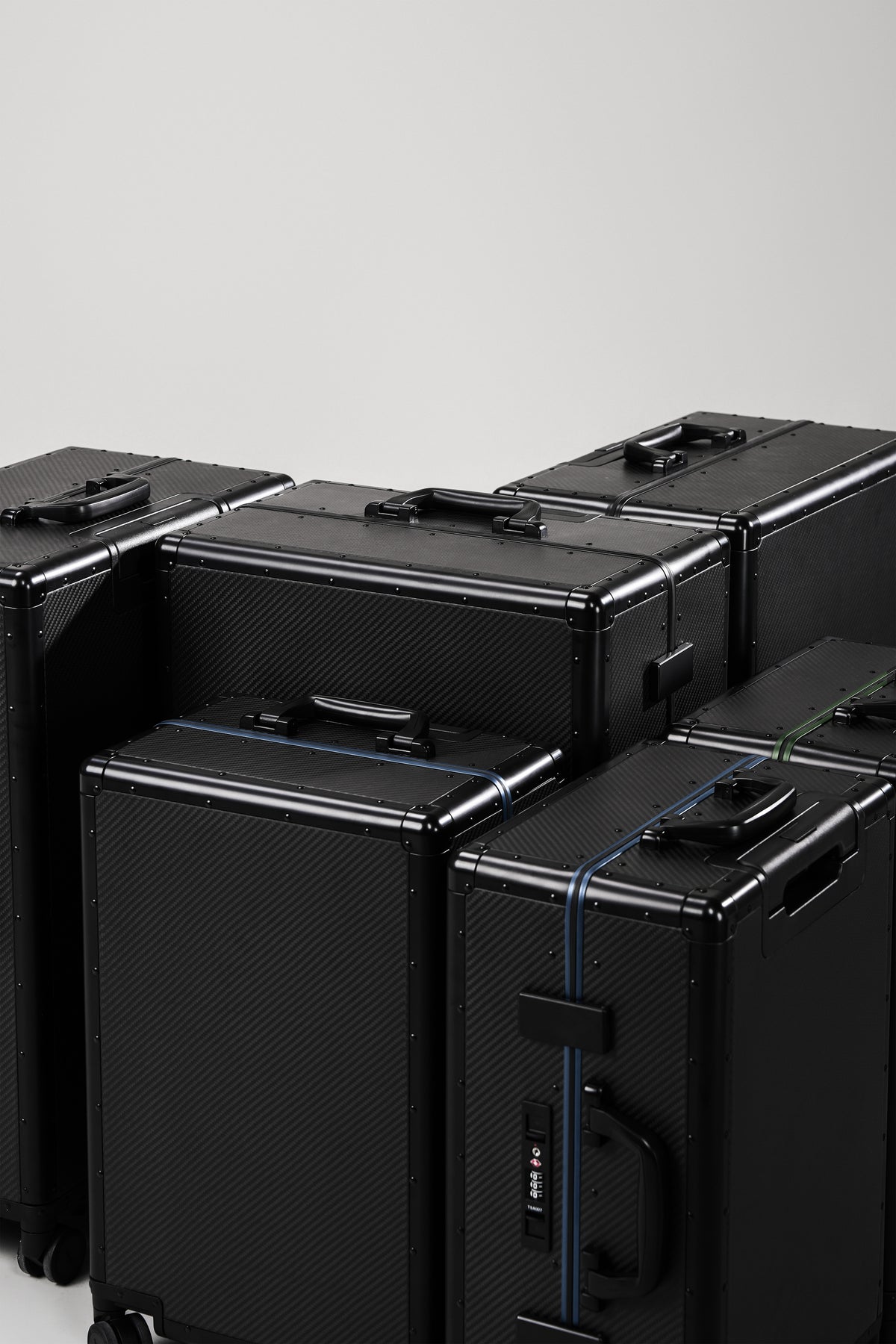
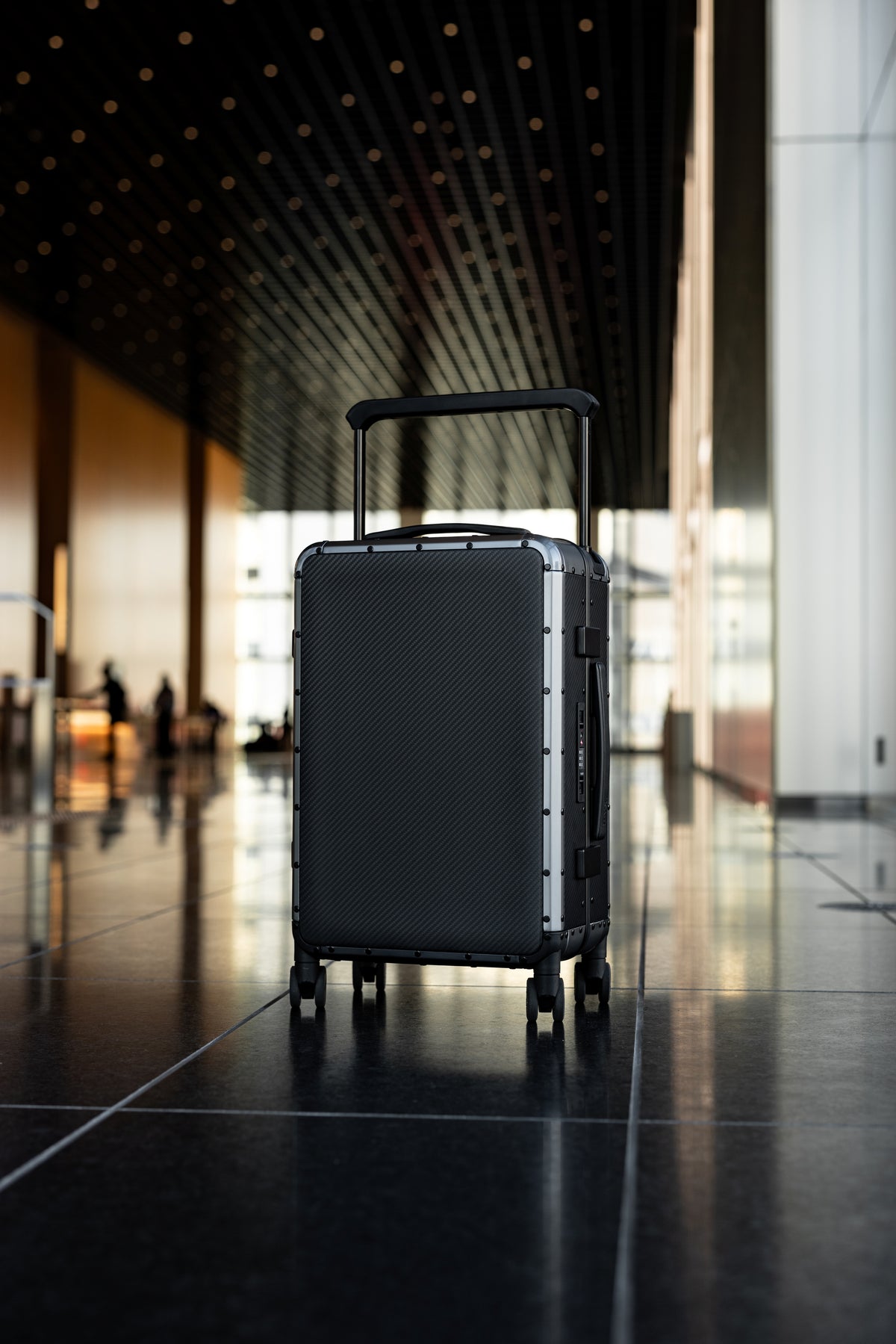


International carry-on size is not determined by the destination, but by the airline you are flying. Some carriers in the USA offer 22 by 14 by 9 inches (or 55.9 by 35.6 by 22.9 cm) and several European airlines have a cabin weight limit which the US domestic carriers don't. So a bag which passes a US gate each week may be denied in Europe by less than a centimetre! Check each person's dimension, and the weight, with the tightest carrier on your route. Verified 15 September 2026.
Is There a Standard International Carry-On Size

No, and no regulator does set one. What does exist is a popular target of approximately 55x40x20 to 23 cm for many European and international carriers and that's the reason for the sale of cabin bags that have the shape. It is not a rule, but a convention of the market.
Any special limits set by the airline take precedence over general guidance. Two carriers can both publish 55 cm of height and differ by 3 cm of depth, which is enough to change the outcome. The weight rule varies even more than the dimensions.
US vs European Carry-On Rules Compared
| Region | Common published dimensions | Weight rule | Enforcement style |
|---|---|---|---|
| US carriers | 22 × 14 × 9 in / 55.9 × 35.6 × 22.9 cm | Often no general cabin weight limit published | Airport sizers exist, and checks are selective in practice |
| European full-service | Around 55 × 40 × 23 cm | Commonly published in kilograms, for example 8 kg | Gate checks more routine, and the weight can be checked too |
| European low-cost | Around 55 × 40 × 20 cm for the larger bag, often paid | Commonly 10 kg for the larger cabin bag | Sizers strictly enforced, with a gate fee if the bag does not fit |
US Airline Carry-On Rules
American publishes 22 by 14 by 9 in including handles and wheels, and requires the bag to fit the airport sizer. Delta publishes the same individual maximums plus a 45 linear inch combined ceiling, also including handles and wheels. Neither states a general cabin weight limit on its current carry-on page, which is the habit that catches US travellers out abroad.
European Airline Carry-On Rules
Lufthansa’s dimensions are 55 x 40 x 23 cm and a maximum of 8 kg per standard cabin bag, plus a personal item of up to 40 x 30 x 15 cm. This number of pieces varies depending on the cabin and fare class, and there may be additional limitations based on aircraft type or national safety authority.
Ryanair is another player. All fares come with one small personal bag (40 x 30 x 20cm) which must be stored under the seat. The larger cabin bag (55 x 40 x 20 kg) includes Priority and 2 Cabin Bags (a paid extra). Ryanair states that a bag which does not fit the sizes will be refused at the gate or placed in the hold for a fee.
Why a US Carry-On Fails in Europe

Here is the arithmetic, and it is closer than most guides admit. A 22 by 14 by 9 in bag is 55.9 by 35.6 by 22.9 cm.
- Against Lufthansa's 55 × 40 × 23 cm, it is 0.9 cm too tall. Width and depth are fine.
- Against Ryanair's 55 × 40 × 20 cm priority bag, it is 0.9 cm too tall and 2.9 cm too deep.
- The width is never the problem. European envelopes are wider than the US one at 40 cm against 35.6 cm.
- Height is the recurring failure, because 22 inches is just over the 55 cm that many European carriers use.
That is why a US-bought carry-on often feels like it should fit and then does not. The bag is not far out, and a sizer does not care.
Carry-On Weight Is the Other Half

Dimensions get the attention. Weight is what actually catches US travellers abroad, because most US domestic carriers publish no general cabin weight limit at all, so it never becomes a habit. Shell material is part of that empty weight; see aluminum vs polycarbonate luggage.
- Lufthansa: 8 kg, about 17.6 lb, per standard cabin bag.
- Ryanair: 10 kg, about 22 lb, for the larger priority cabin bag.
- American and Delta: no general limit on their current carry-on pages.
- Other international carriers commonly use 7 kg. Check yours; the range is wide.
That is where the empty case comes out of, and that's where "luggage weight" no longer remains an abstraction. If a suitcase contains 4.25 kg and you are limited to 8 kg, how much do all your belongings weigh? A lighter case does not earn you a larger allowance, it earns you more of your allowance.
How Airline Measurements Work
The outside of a packed bag is measured by the airlines. If a carrier lists wheels and handles as an item, as American, Delta, Lufthansa and Air Canada all do, then that's what you compare, not the shell.
Interior capacity in litres is a separate figure and it is not an airline measurement. A 40 L case and a 34 L case can have the same exterior height. Capacity tells you how much fits inside; only the exterior dimensions decide whether the bag boards.
One practical trap: measure the bag in the configuration you will actually travel in. If you fly with the expansion open or the front pocket stuffed, that is the depth the sizer will test.
Mixed Itineraries, US to Europe

On a mixed trip the rule is simple. Measure against the tightest leg, NOT the first leg of the trip.
A bag that passes a US transatlantic connection can be denied on the next leg of the trip on the short European leg, as the next carrier may have a different envelope and weight limit. Codeshares make this worse: the airline on your booking may not be the airline operating the flight, and the operating carrier's rules apply.
Separately, and regardless of dimensions, the FAA notes that cabin stowage space is limited and bags may have to be checked. Meeting a limit is permission to bring the bag, not a reserved space for it.
What the 2026 EU Rules Change

This is the one story that is most misreported in this category, so here is the actual one. The approval of the Revised air passenger rights regulation was confirmed by The European Parliament on 7th July 2026 and approved by The Council of the EU on 13 July 2026.
What it promises, in the Council of the EU's own terms: passengers always have the right to carry one personal item, of at least 40x30x15 cm or which fits under the seat in front.
This is the one that got worst reported in the category, so here is the actual situation. On 7th July 2026, the revised air passenger rights regulation was approved by the European Parliament and on 13th July 2026, the Council of the EU finally approved it. Fares with an allotment for hand baggage will be shown as the default when no booking process has commenced.
What it does not do is the part the headlines got wrong. It does not mean the larger overhead trolley is free on all fares, and the Council is clear that an airline can have a lower fare without hand baggage. It does not establish a single trolley size in the EU, each carrier maintains its own size. And it's not yet applicable: the regulation is published, then becomes applicable after 20 days, it has 12 months to apply, which means that it will have practical effect around 2027.
So for any trip you are planning now, nothing about your bag has changed. Check the carrier.
How to Choose a Carry-On for International Travel
- List every operating carrier on the itinerary, including regional and codeshare partners.
- Find the tightest published dimension on each of the three axes across that list. That is your target envelope.
- Find the lowest published weight limit across the same list, then subtract the empty weight of the case you are considering.
- Measure any candidate bag at its outermost points, in travel configuration, and compare each side separately.
- If you fly Europe often, buy to roughly 55 × 40 × 20 cm rather than to the US 22 × 14 × 9 in shape.
- If you fly mostly US carriers, the larger US envelope buys you real capacity you would otherwise give up.
That last trade-off is the honest one. A bag sized for Ryanair gives up meaningful volume on a US domestic trip. A bag sized for American will not board a Ryanair priority slot. There is no single case that maximises both, which is why the strictest-carrier rule matters more than any product recommendation. Our luggage size comparison shows how carry-on, medium and large cases differ.
An MVST Carry-On Sized for European Cabins
Here’s how that method looks with a real case. The table compares one MVST carry-on against Lufthansa’s published cabin bag size of 55 by 40 by 23 cm, side by side and dimension by dimension.
| Product | Published dimensions | Capacity | Empty weight | Compared with Lufthansa's 55 × 40 × 23 cm |
|---|---|---|---|---|
| TREVA Carry-On | 55 × 37.5 × 22 cm | 34 L | 4.25 kg | Within all three published dimensions |
The TREVA carry-on is published at 55 × 37.5 × 22 cm, so it sits inside Lufthansa’s envelope on all three sides, with room to spare on width and depth. At 4.25 kg empty, it also leaves 3.75 kg of Lufthansa’s 8 kg allowance for what you pack. You’ll find the full details on the TREVA carry-on specifications page. As with any bag, measure your own case in travel configuration before a trip, and check the rules of every carrier you’re flying.
International Carry-On Checklist

- Check the rules of each operating carrier, rather than just the one you reserved with.
- Measure outside height, width and depth at extreme points, in travel mode.
- Weigh the packed bag if any leg is on a carrier that publishes a kilogram limit.
- Do not store liquids outside of the security guidelines for each departure airport (these differ from the airline size guidelines).
- Please review the carrier pages 24-48 48 hours prior to departure as these rules are subject to change.
Conclusion
The rules are not standard, just a bunch of airline rules that are converging towards 55 by 40 by 20 to 23 cm in Europe, and 22 by 14 by 9 in the USA. The safest bag is the one measured against the strictest carrier on your itinerary, on dimensions and on weight together. When you are about to board any operating airline, inquire whether they are still asking for a free trolley or not and don't take the 2026 EU reform for granted as a free trolley.
FAQs
What is the carry-on size limit in Europe?
No limit exists in Europe in general. Carriers are grouped tightly around 55 x 40 x 20-23 cm and most have a weight limit.
- Lufthansa: 55 × 40 × 23 cm, 8 kg
- Ryanair larger cabin bag: 55 × 40 × 20 cm, 10 kg, and it is a paid add-on
- Ryanair free personal bag: 40 × 30 × 20 cm, under the seat
- Check your own carrier. A 3 cm difference in depth is enough to fail a sizer
What is the standard international carry-on size?
The target size is a market convention (around 55x40x20-23 cm) that is not a standard, and there is no regulator that sets the target size. It will always be superseded by the rules of the particular airline. Purchasing to that form increases your likelihood with less than perfect carriers, but it doesn't ensure you'll be accepted by any one carrier.
Is international carry-on size smaller than US domestic?
Generally, yes for height and depth and no for width. A US 22 by 14 by 9 in bag is 55.9 by 35.6 by 22.9 cm, so it is 0.9 cm taller than the 55 cm many European carriers publish. European envelopes are actually wider, measuring 40 cm in width as opposed to 35.6 cm. The difference is weight – most domestic airlines in the U.S. do not impose a weight limit, whereas many of the European airlines do.
Can a 22-inch suitcase be a carry-on internationally?
Sometimes, and not reliably. At 22 inches of actual exterior height the bag is 55.9 cm, which exceeds the 55 cm published by Lufthansa and Ryanair among others. Some international carriers publish larger envelopes and will accept it. If you fly Europe regularly, a bag built to 55 cm or under is the safer purchase.
What does a 10 kg carry-on bag look like?
10 kg is a weight allowance, not a size, and the two are set separately. Ryanair's 10 kg applies to a bag of 55 by 40 by 20 cm, which is a typical European cabin trolley. What matters is what the allowance leaves you: subtract the empty weight of the case from the limit. A 4.25 kg suitcase on a 10 kg allowance leaves 5.75 kg for contents.
What happens if my carry-on is 1 inch too big?
It is over the published limit, and the outcome depends on the carrier.
- It may fail a sizer at check-in or the gate
- Ryanair states an oversize bag is refused at the gate or placed in the hold for a fee
- A full-service carrier may gate check it, sometimes without a charge
- Do not plan around tolerance. Enforcement varies by airport; the published limit does not
Are wheels included in carry-on measurements?
On the carriers checked here, yes. All three, American, Delta, and Lufthansa, say that they publish their dimensions which include the bag with wheels and handles. Measure exterior of packed case, not the case; the wording is what controls, read the measurement note on your own carrier's page.
Can one suitcase work for both US and European airlines?
Yes, if you size it to Europe rather than to the US.
- A bag at or under 55 × 40 × 20 cm works across the widest range of carriers
- That shape is comfortably inside the US 22 × 14 × 9 in envelope too
- The cost is capacity: you give up volume you could use on US domestic trips
- Sizing to the US envelope instead will fail many European carriers on height
Is 28-inch luggage too big for international check-in?
No, it's not usually, as 28" is checked-bag size and not cabin size. Most carriers limit a standard checked bag to 158 cm (or 62 linear inches) of length, width and depth and most have a weight limit of 23 kg. In the case, there's a 28" case typically housed, but add your own three measurements and weigh the packed bag – oversize and overweight fees will apply.
What items are forbidden in carry-on luggage?
This is not a size of the airline question, but a security question, and the rules are determined by the security authority at the airport you leave from. In the U.S. European airports, liquid limits are equivalent (3.4 oz or 100 mL per one quart-size bag) and some have started to adjust liquid limits. Inquire at the departure airport on each segment.
Sources
出典・参考資料
- [1]Council of the European Union, Air passenger rights, policy page, Council of the European Union. Passengers are always entitled to one personal item of at most 40 × 30 × 15 cm or one that fits under the seat, and fares including a hand-baggage allowance must be displayed by default before booking starts, while airlines may still offer a fare without hand baggage. Accessed 15 September 2026.
- [2]Council of the European Union, Council gives final clearance for stronger air passenger rights, press release, Council of the European Union. Final Council clearance on 13 July 2026, following Parliament approval on 7 July 2026. Accessed 15 September 2026.
- [3]American Airlines, Carry-On Bags, American Airlines. 22 × 14 × 9 in including handles and wheels, and the bag must fit the airport sizer. Verified 15 September 2026.
- [4]Delta Air Lines, Carry-On Baggage, Delta Air Lines. 22 × 14 × 9 in with a 45 linear inch combined maximum, measurements including handles and wheels. Verified 15 September 2026.
- [5]Lufthansa, Carry-on baggage, Lufthansa. 55 × 40 × 23 cm and 8 kg per standard cabin bag, personal item 40 × 30 × 15 cm. Piece count varies by cabin and fare, and further restrictions can apply by aircraft type or national safety authority. Verified 15 September 2026.
- [6]Ryanair, Ryanair's Bag Policy, Help Centre, Ryanair. Free small personal bag 40 × 30 × 20 cm under the seat; 10 kg cabin bag 55 × 40 × 20 cm with Priority and 2 Cabin Bags; a bag that does not fit the sizers is refused at the gate or placed in the hold for a fee. Verified 15 September 2026.
- [7]Federal Aviation Administration, Carry-On Baggage Tips, Office of Aviation Safety, US Department of Transportation. Passengers should check the airline's own carry-on program, and limited cabin stowage space can require bags to be checked. Accessed 15 September 2026.